


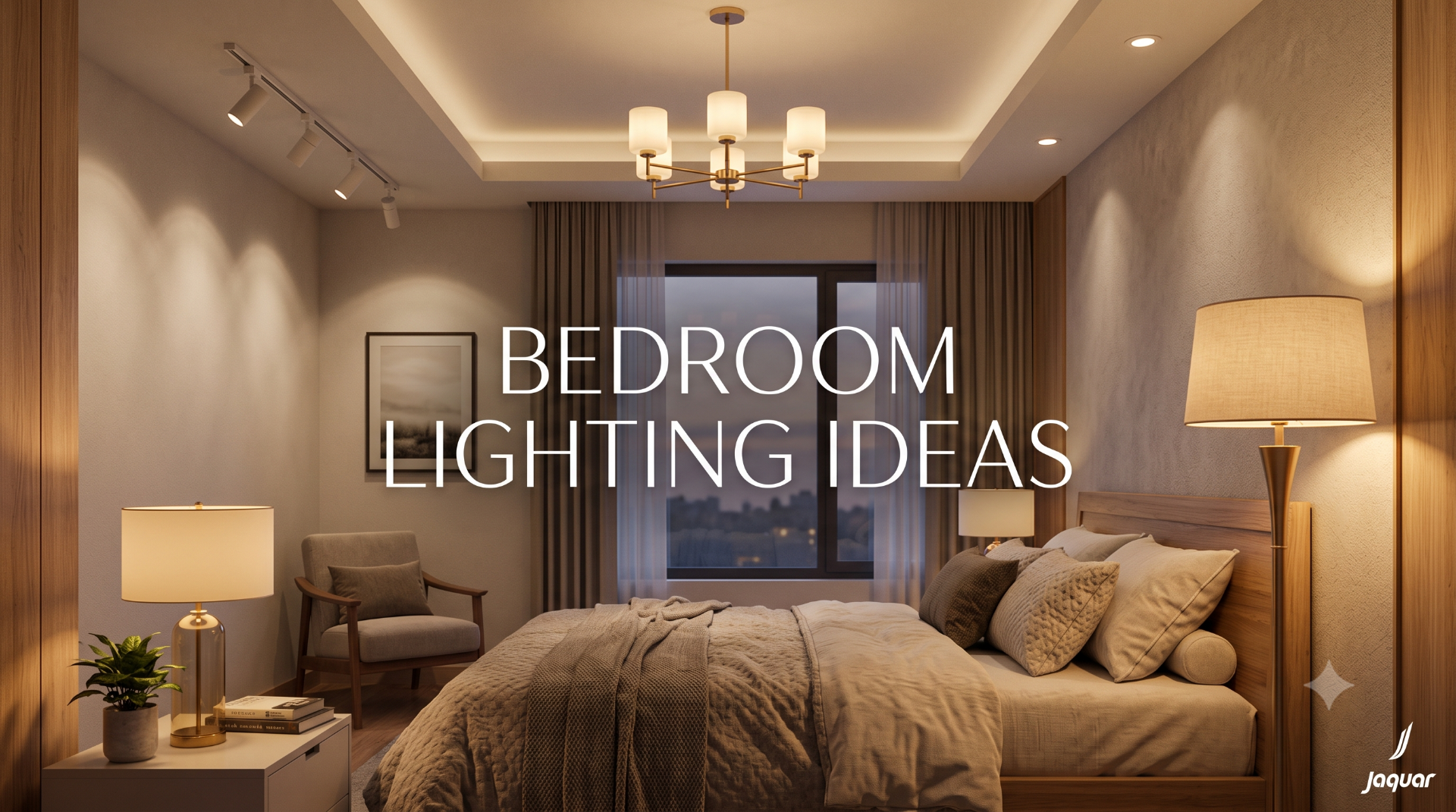
Lighting does more than make a bedroom visible after sunset. It influences how the room feels when you wake up, how comfortably you read at night, how clearly you see around wardrobes and dressing areas, and how effectively the bedroom transitions from an active space to a restful one.
A well-lit bedroom rarely depends on a single fixture. The most considered spaces combine different forms of illumination so that the room can serve several purposes without feeling excessively bright or visually cluttered. Ceiling lighting can establish a useful level of general illumination, recessed fixtures can direct attention to selected areas, wall lamps can add a softer layer around the bed, while decorative fixtures can introduce character without becoming the sole source of light.
For homes in the UAE, bedroom lighting also needs to work with contemporary interiors, varied room sizes, generous daylight in many homes and the preference for clean, coordinated spaces. The right approach is therefore less about adding more lights and more about deciding where light is needed, what mood it should create and how different fixtures should work together.
Here are more than 20 practical bedroom lighting ideas to help you create a bedroom that feels comfortable, balanced and thoughtfully designed.
1. Start With Layered Bedroom Lighting
The most useful starting point is to think in layers rather than individual fixtures.
Ambient lighting provides the general illumination needed to move around the room. Recessed or surface-mounted fixtures can perform this role effectively. Task lighting is more focused and is useful around areas such as the bedside or dressing zone. Accent and decorative lighting then add visual interest and depth.
This layered approach prevents the common problem of relying on one bright ceiling fixture for everything. Instead, different lighting sources can serve different moments of the day.
For example, a bedroom can use recessed lights for general visibility, a pair of wall lamps beside the bed for reading and a decorative pendant or chandelier as a visual focal point. Each layer has a purpose, yet they work together as one lighting scheme.
2. Use Recessed Lights for a Clean Ceiling
Recessed lighting is particularly useful when the design objective is a visually uncluttered ceiling.
Because the fixture sits within the ceiling rather than projecting prominently into the room, recessed lights can provide useful general illumination while keeping attention on the architecture, furniture and finishes.
They work especially well in contemporary bedrooms where clean lines are important. Instead of placing multiple fixtures randomly, consider arranging recessed lights according to the room's functional zones.
Avoid positioning every light directly above the bed. A better approach is to distribute illumination across circulation areas, wardrobes and open floor space while using separate bedside lighting where required.
3. Create a Soft Bedside Lighting Zone
The area immediately around the bed deserves its own lighting strategy.
A pair of wall lamps positioned on either side of the headboard can create symmetry while providing a practical source of light for reading or winding down. Wall-mounted fixtures also help keep bedside surfaces free for books, personal items or décor.
The placement matters as much as the fixture itself. A light positioned too high may feel visually disconnected from the bed, while one placed too low may create uncomfortable glare.
The objective should be to create a concentrated pool of illumination around each side of the bed without flooding the entire room with light.
4. Try Matching Wall Lamps on Both Sides of the Bed
Symmetrical lighting is one of the simplest ways to make a bedroom feel organised.
Matching wall lamps on either side of the bed establish visual balance and work particularly well when the headboard is the room's central architectural element.
This approach is useful in both large and compact bedrooms. In smaller rooms, wall-mounted fixtures can also reduce the need for bulky bedside lamps.
Jaquar UAE's lighting portfolio includes wall lamps in different styles, making this approach adaptable to contemporary as well as more decorative bedroom interiors.
5. Introduce a Pendant Above Each Bedside Table
Bedside pendants can offer an alternative to conventional table or wall lighting.
Suspending a pendant beside each side of the bed creates vertical interest and can make the bedside area feel more deliberately designed. The approach works particularly well when the bedroom has sufficient ceiling height and the pendant does not interfere with movement around the bed.
The scale should be proportionate to the bedside table and overall room. A large fixture in a compact bedroom can overwhelm the space, while a very small pendant may disappear visually.
Jaquar UAE offers pendant lighting in several forms, including decorative options that can be incorporated into residential interiors.
6. Make the Ceiling the Visual Focal Point
A bedroom does not always need a feature wall to create a focal point.
A carefully selected ceiling fixture can perform the same role while drawing the eye upward. This is particularly effective in bedrooms with relatively simple walls and furniture.
A decorative pendant or chandelier can become the central design element, with the rest of the lighting kept relatively restrained.
The important consideration is proportion. A statement fixture should relate to the size of the room, the bed and the ceiling height. It should feel intentional rather than simply oversized.
7. Choose a Chandelier for a Statement Bedroom
A chandelier can add character to a bedroom without requiring additional decorative elements elsewhere.
Rather than treating a chandelier as the room's only light source, use it as a focal layer supported by more discreet ambient lighting.
This creates a more flexible environment. The decorative fixture establishes visual identity, while recessed or surface lighting provides practical illumination when needed.
Jaquar UAE's decorative range includes chandeliers in a variety of forms and finishes, giving homeowners and designers options for different interior directions.
8. Use a Compact Ceiling Light in a Smaller Bedroom
Large decorative fixtures are not always the right choice.
For compact bedrooms, a surface-mounted or appropriately scaled ceiling light can provide practical illumination without visually reducing the perceived height of the room.
The fixture should sit comfortably within the proportions of the space. If the room has a low ceiling, a relatively compact profile can maintain a sense of openness.
This approach is particularly useful in guest bedrooms, children's rooms and smaller apartments where every visual element needs to work efficiently.
9. Combine Recessed and Decorative Lighting
One of the most versatile combinations is recessed lighting paired with a decorative fixture.
Recessed lights handle general visibility, while a pendant or chandelier adds personality. This prevents the decorative fixture from having to provide all the illumination.
It also gives the bedroom greater flexibility. When the decorative light is used alone, the atmosphere can feel softer and more intimate. When the recessed lighting is also switched on, the room becomes brighter and more functional.
This combination is especially effective in medium and large bedrooms where a single lighting type can otherwise leave some areas underlit.
10. Use Wall Lighting to Highlight the Headboard
The headboard naturally creates a visual anchor, so lighting can be used to reinforce it.
Wall lamps placed beside or slightly above the headboard can frame the bed and create a sense of symmetry. In bedrooms with textured, upholstered or decorative headboards, softer wall illumination can also bring attention to the material without overpowering it.
The key is restraint. If the headboard already contains a strong pattern or texture, the lighting should complement rather than compete with it.
11. Use Track Lighting Where Flexibility Matters
Track lighting can be useful when a bedroom needs adjustable illumination across different areas.
Rather than directing every light downward, individual heads can be oriented toward wardrobes, artwork, seating areas or architectural details.
This makes track lighting particularly useful in larger bedrooms where furniture layouts may change over time.
It can also work well in dressing zones or bedrooms with a small sitting area, provided the fixture arrangement remains visually consistent with the rest of the interior.
12. Highlight a Reading Corner
If the bedroom includes a chair, chaise or small reading area, give that zone its own lighting.
A dedicated light source makes the area functional without requiring the main bedroom light to remain switched on.
A floor lamp can work well where space permits, while a wall-mounted fixture can be more appropriate when floor area is limited.
Jaquar UAE's decorative lighting portfolio includes floor lamps and wall lamps, allowing the lighting approach to be adapted to the available space.
13. Add a Floor Lamp to an Empty Corner
An unused bedroom corner can sometimes make the room feel unfinished. A floor lamp can give that area a clear visual purpose.
The idea works particularly well beside an accent chair, a small side table or a reading area. Even when the lamp is not used continuously, its presence can help balance the room's composition.
Choose the height according to nearby furniture. A very tall lamp beside a low chair can feel disconnected, while a compact fixture may disappear into the surroundings.
The best floor lighting feels integrated into the furniture arrangement rather than added as an afterthought.
14. Use Table Lamps for a Familiar, Flexible Look
Table lamps remain useful because they are easy to integrate and visually familiar.
A pair of lamps on bedside tables can create symmetry, while a single lamp can be used on a console or dresser when asymmetry better suits the room.
They are particularly useful for creating a lower level of illumination in the evening. Instead of illuminating the entire ceiling, the light remains closer to eye level and furniture, helping create a calmer atmosphere.
Jaquar UAE includes table lamps within its decorative lighting portfolio, making them an option for bedrooms where portable decorative lighting is preferred.
15. Create a Statement Around the Bed With Pendant Lighting
Instead of using pendants only as functional bedside lights, consider them as part of the bedroom's visual composition.
A pair of matching pendants can frame the bed. Alternatively, two fixtures with a related form but different positioning can introduce a slightly more relaxed look.
This works particularly well in rooms with tall ceilings, simple headboards and minimal wall decoration.
The proportions should remain comfortable. Pendant fixtures should not hang so low that they interfere with movement or create a visual obstruction when sitting up in bed.
16. Use Linear Lighting for Contemporary Bedrooms
Linear lighting is useful when you want illumination to follow the architecture of the room.
A linear fixture can emphasise a long wall, ceiling plane or defined architectural section. It can also create a more directional visual language than a conventional central ceiling fixture.
In contemporary bedrooms, this can complement horizontal furniture, long wardrobes and streamlined interiors.
The strongest results usually come from integrating the light into the architecture rather than adding it randomly. The line should have a reason to exist within the room's overall geometry.
17. Give the Wardrobe Area Its Own Lighting
A beautifully designed bedroom can still be inconvenient if the wardrobe area is poorly illuminated.
General ceiling lighting may not adequately illuminate the contents of a wardrobe, particularly when the person standing in front of it blocks the light.
Positioning ambient or recessed lighting appropriately around the wardrobe zone can improve visibility without making the entire bedroom brighter.
The same principle applies to dressing areas. Lighting should help you see clothing, accessories and surrounding surfaces clearly without creating harsh shadows.
18. Use Different Lighting Layers for Morning and Evening
A bedroom performs differently throughout the day, so its lighting should not be designed around a single scenario.
During the morning, brighter general illumination may be useful when getting ready. In the evening, lower-level bedside or decorative lighting may create a more comfortable transition toward sleep.
This is where layered lighting becomes particularly valuable. Different fixtures can be used independently rather than switching everything on at once.
A practical bedroom therefore benefits from several controllable lighting points rather than one central source.
19. Keep Small Bedrooms Visually Light
In a compact bedroom, lighting should support the feeling of space rather than compete with it.
Recessed lights, compact surface fixtures and wall-mounted lamps can reduce visual clutter. Decorative fixtures can still be used, but their scale should be carefully considered.
A small room also benefits from consistent placement. Too many different fixture shapes can make the ceiling and walls appear busy.
Choose one dominant lighting language and use secondary fixtures to support it.
20. Use Decorative Lighting to Complement the Interior Style
Lighting should relate to the room's broader design language.
A simple contemporary bedroom may benefit from clean-lined pendants or understated wall fixtures. A more decorative bedroom can accommodate a chandelier or a fixture with stronger detailing.
This does not mean every element has to match perfectly. In fact, controlled contrast can make the room more interesting.
The important point is to establish a relationship between the lighting, furniture finishes, wall treatments and overall proportions.
21. Use Lighting to Emphasise Architectural Features
Bedrooms often contain features that deserve more attention than they receive: a textured wall, a recessed niche, a distinctive ceiling, an upholstered headboard or a carefully designed seating area.
Lighting can make these features more visible.
Rather than adding decorative objects, consider whether an existing architectural element can become the focal point through carefully positioned illumination.
This approach creates visual depth while keeping the room relatively uncluttered.
22. Create a Balanced Lighting Scheme Around a Large Bed
Large beds can dominate a bedroom, particularly in spacious master suites. Lighting helps maintain balance around this central element.
A useful arrangement can combine a central ceiling fixture with symmetrical bedside lighting and additional illumination around circulation areas.
The goal is to prevent the area around the bed from becoming disproportionately bright while the rest of the room remains visually dark.
In larger bedrooms, multiple lighting zones are generally more effective than simply increasing the intensity of one central fixture.
23. Use a Decorative Fixture in a Minimal Bedroom
Minimal interiors do not necessarily require minimal lighting.
In fact, a carefully selected decorative fixture can give a restrained bedroom a distinct identity without adding artwork, accessories or excessive furniture.
The rest of the lighting should then remain relatively quiet.
For example, a sculptural pendant or understated chandelier can become the principal decorative element, while recessed lighting supports the room's everyday functionality.
This creates contrast without making the space feel over-designed.
24. Coordinate Lighting With Bedroom Furniture
Furniture placement should be considered before finalising the lighting plan.
A bedside fixture needs to align with the bed and nightstand. A floor lamp should work with the chair or corner it occupies. Recessed lights should support circulation rather than simply follow a geometric grid.
This is particularly important during bedroom renovations, because changing lighting positions after wardrobes, false ceilings and furniture have been installed can be difficult.
A simple floor plan showing the bed, wardrobes, side tables, dressing area and seating area can make lighting decisions much easier.
25. Use a Restrained Lighting Palette
One of the easiest ways to create visual consistency is to avoid introducing too many unrelated fixture styles.
A bedroom may contain recessed lights, wall lamps, pendants and decorative fixtures, but they should still feel like part of the same design story.
This can be achieved through repeated finishes, similar geometric forms or a consistent approach to scale.
The objective is not uniformity. It is coherence.
26. Choose Lighting According to Ceiling Height
Ceiling height should influence fixture selection.
Bedrooms with higher ceilings can accommodate hanging fixtures with greater visual presence, while rooms with lower ceilings often benefit from recessed or surface-mounted solutions.
The height of a pendant should also be considered in relation to the bed and walking paths.
A fixture that looks perfectly proportioned in a showroom may feel intrusive when installed too low in a bedroom, so the actual room dimensions should always guide the decision.
27. Consider the Room's Natural Light
Artificial lighting should complement, not fight against, the bedroom's daylight.
A room with generous natural light may need relatively modest ambient lighting during the daytime but still require carefully positioned sources after sunset.
Rooms with limited daylight, meanwhile, may need stronger and more evenly distributed general illumination.
Observe where daylight enters the room and which areas remain darker. This gives you a better understanding of where artificial lighting will actually be needed.
How to Choose the Right Bedroom Lighting
With so many possible combinations, selecting bedroom lighting can become confusing. A simple decision-making process can make it easier.
Consider the bedroom size
Small bedrooms generally benefit from compact fixtures and fewer visual elements. Medium-sized rooms offer greater flexibility, while large bedrooms can accommodate multiple lighting layers and larger decorative fixtures.
Consider the ceiling
A low ceiling usually favours recessed or surface-mounted lighting. Higher ceilings create opportunities for pendants and chandeliers.
Consider how you use the room
A bedroom used mainly for sleeping needs a different lighting balance from one that also functions as a reading space, dressing area, home office or private sitting room.
Consider the furniture arrangement
Lighting should follow furniture rather than be planned independently from it. Identify the bed, bedside tables, wardrobe, dresser and seating areas before deciding where fixtures should go.
Consider the mood
Think about how you want the room to feel at different times. General illumination is useful for practical tasks, while lower-level decorative or bedside lighting can create a calmer evening atmosphere.
Consider visual consistency
Mixing lighting types can add depth, but unrelated designs can make the room feel chaotic. Look for relationships in finish, shape, scale or material.
Common Bedroom Lighting Mistakes to Avoid
Relying on one central light
A single ceiling fixture often creates uneven illumination and leaves certain areas dependent on reflected light.
Making every light equally bright
Different areas have different requirements. A wardrobe, reading zone and circulation area do not necessarily need the same level of illumination.
Ignoring the bedside area
The bed is usually the most important zone in a bedroom. It deserves lighting that is practical, comfortable and visually balanced.
Choosing fixtures without considering scale
A fixture that is too large can dominate a compact bedroom, while an undersized fixture can disappear in a large room.
Installing lights without considering furniture
Lighting positions should respond to how people actually use the room. Otherwise, a beautifully planned ceiling can still produce awkward shadows or poorly illuminated zones.
Adding too many decorative fixtures
Decorative lighting works best when it has a clear role. Too many statement pieces can compete with each other and reduce the sense of calm that a bedroom should provide.
A Practical Bedroom Lighting Formula
For homeowners starting from scratch, a straightforward formula can help:
One layer for general illumination + one layer for bedside or task lighting + one decorative or accent layer.
For a compact bedroom, this might mean recessed lighting combined with two wall lamps.
For a medium bedroom, it could be recessed lighting, bedside pendants and a decorative ceiling fixture.
For a large master bedroom, the scheme could extend to recessed lighting, bedside wall lamps, a statement chandelier, wardrobe lighting and a floor lamp in a seating area.
The exact combination should always depend on the room rather than following a rigid template.
Why Layered Lighting Works So Well in Bedrooms
The bedroom changes throughout the day. It can be a place to get ready in the morning, read in the evening, relax before sleeping and occasionally work or spend quiet time during the day.
A single lighting source cannot respond equally well to all these situations.
Layered lighting creates flexibility without requiring the room to change physically. Different sources can be used individually or together depending on what is happening in the room.
That flexibility is ultimately what makes a lighting plan feel considered. Good bedroom lighting is not simply about how the room looks when every fixture is switched on. It is about how comfortably the space works across different moments.
Frequently Asked Questions About Bedroom Lighting
1. What type of lighting is best for a bedroom?
A combination of ambient, task and decorative lighting generally works better than relying on one fixture. Recessed or surface lighting can provide general illumination, while wall lamps, pendants, table lamps or floor lamps can support specific activities and create a softer atmosphere.
2. Should bedroom lights be placed directly above the bed?
Not necessarily. Lights positioned directly above the bed can create unwanted brightness or glare depending on their direction and intensity. A better approach is to distribute general illumination around the room while using dedicated bedside lighting for reading and other activities.
3. Are recessed lights suitable for bedrooms?
Yes. Recessed lights can provide clean, unobtrusive general illumination and work particularly well in contemporary bedrooms. Their positioning should be planned around furniture, circulation and functional zones rather than simply arranged in a uniform grid.
4. Are pendant lights suitable for bedside lighting?
Pendant lights can work very well beside a bed, especially where ceiling height allows sufficient clearance. They can provide focused illumination while also adding vertical visual interest. Their size, hanging height and position should be coordinated with the bedside tables and bed.
5. How many types of lights should a bedroom have?
There is no fixed number. A practical starting point is three lighting layers: general illumination, task or bedside lighting and decorative or accent lighting. Larger bedrooms may benefit from additional lighting around wardrobes, dressing areas or seating zones.
Conclusion
The best bedroom lighting is not necessarily the brightest or the most elaborate. It is the lighting that responds naturally to the way the room is used.
Start with the room's size, ceiling height and furniture arrangement. Establish a reliable level of ambient illumination, then add focused lighting around the bed, dressing area or reading corner. Finally, introduce decorative fixtures where they add character or strengthen the room's design.
For contemporary homes, the Jaquar UAE lighting portfolio provides options across decorative and indoor lighting categories, including chandeliers, pendants, wall lamps, floor lamps, table lamps, recessed lighting, surface lighting and other indoor solutions.
Choosing fixtures as part of a complete lighting plan makes it easier to create a bedroom that feels cohesive rather than assembled piece by piece. With the right combination of form, placement and illumination, lighting can make the bedroom more comfortable, functional and visually considered without overwhelming the space.