

Walk into a well-designed hotel and the lighting is usually one of the first things you notice, even when you do not notice the lights themselves. A bright reception can feel very different from a softly lit lounge. A restaurant may need a more intimate setting, while corridors and outdoor areas have their own practical requirements.
For hotel owners, architects and designers, this makes lighting more than a finishing touch. It has to work with the interior, support the experience guests expect and make sense from an operational point of view. This is particularly relevant for hotels and resorts where lighting is required across a large number of spaces and for long periods.
Why Lighting Has Become a Luxury Hospitality Differentiator
Every area of a hotel has a job to do. The entrance creates the first impression. The lobby introduces the property's design language. Guest rooms need comfortable illumination, while restaurants, spas, corridors and outdoor areas require different approaches.
Good hotel lighting design takes these differences into account instead of treating the entire property as one space.
Jaquar's commercial lighting range includes solutions for hospitality venues, hotels, restaurants and other commercial environments. Its portfolio includes commercial strip lights, COB lighting and other indoor and outdoor lighting options.
Hospitality Lighting Trends Transforming Luxury Hotels
1. Smarter Approach to Lighting Control
Large hotels have many lighting points to manage. Reception areas, corridors, restaurants and guest spaces may all have different requirements. Lighting controls can therefore be considered during the planning stage rather than added later.
Jaquar's commercial COB lighting range is compatible with modern lighting control systems. This gives project teams the option to consider control alongside the lighting scheme when planning a commercial space.
The important point is to choose controls according to the actual requirements of the property. Not every space needs the same level of control.
2. Lighting Designed Around the Space
There is no single lighting solution that works equally well throughout a hotel.
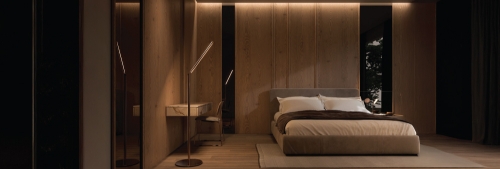
A lobby may need focused illumination to draw attention to architectural features. A corridor needs consistent light for movement, while a guest room requires a more comfortable arrangement that works for different activities.
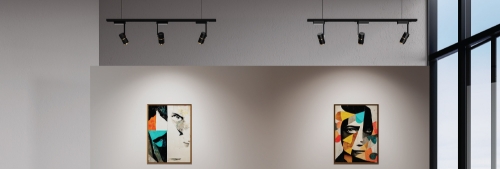
This is where hospitality interior lighting needs to be planned with the room itself in mind. Jaquar's commercial COB range includes recessed downlights, surface-mounted focus lights and extended focus lights, giving designers different options for commercial applications.
3. Layered Lighting Instead of One Light Source
A hotel interior can feel flat when it relies on one type of illumination. Using a combination of general, focused and decorative lighting can give the space more depth.
Jaquar's commercial lighting portfolio provides options that can be used for different purposes. COB lights are suited to focused illumination, while strip and linear lighting can be used where continuous or indirect illumination is required. Jaquar's own lighting content also identifies hotels, corridors, lobbies and guest rooms as applications for LED linear lighting.
For designers, this makes it possible to build the lighting scheme around the architecture rather than simply filling the ceiling with fixtures.
4. LED Lighting and Operational Efficiency
Energy use becomes an important consideration when a property has hundreds of rooms and multiple common areas.
Commercial spaces are utilizing LED lighting more and more because of the energy efficiency and long operating life. Jaquar's commercial strip lights use LED technology and are available in different power options and colour temperatures. The company states that the range has a lifespan of more than 50,000 hours.
For a hotel, this can also reduce the frequency of replacements and make maintenance planning easier. The choice should still be based on the requirements of each area and the specifications of the selected product.
5. Decorative Lighting as Part of the Hotel Identity
Not every light in a luxury hotel needs to disappear into the ceiling.
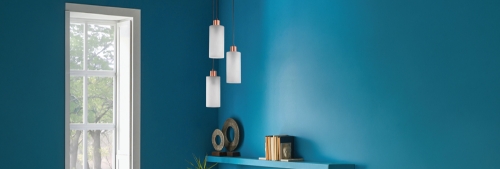
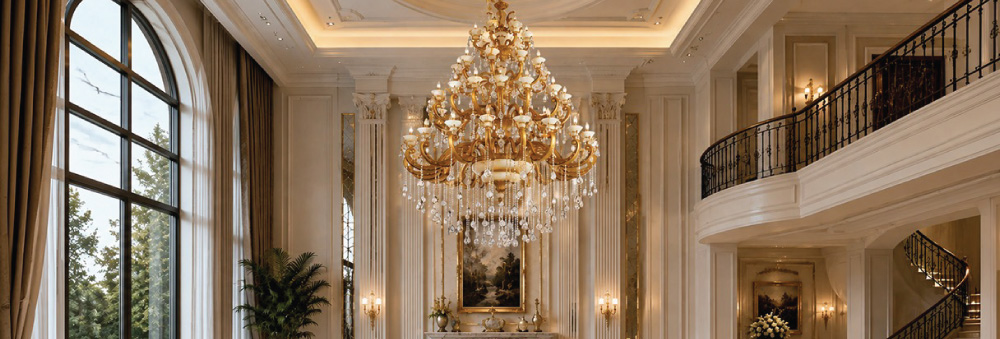
Decorative fixtures can become part of the interior, particularly in reception areas, restaurants, lounges and other guest-facing spaces. A chandelier or pendant can complement the architecture, while wall and table lamps can add another layer to the room.
Jaquar's lighting portfolio includes chandeliers, pendants, floor lamps, table lamps and wall lamps. These options allow decorative lighting to be considered alongside the wider lighting scheme.
The key is restraint. A statement fixture works best when it belongs to the space rather than competing with everything around it.
6. Outdoor Lighting as Part of the Guest Experience
Hotel lighting does not stop at the entrance.
Paths, gardens, entrances and landscaped areas all contribute to the way guests experience a property. Outdoor lighting also needs to take account of the surroundings and the intended application.
Jaquar's lighting portfolio includes outdoor solutions such as post top lights, bollards, poles, surface lights and recessed options. Its commercial lighting products are also listed for applications including hotels, restaurants and outdoor areas.
For resorts and larger properties, including outdoor lighting as part of the overall project can help create a more consistent experience from arrival onward.
Lighting Priorities Across Hospitality Spaces
Hotel Area | Lighting Priority |
Lobby | Feature lighting and ambience |
Guest Room | Comfortable, layered illumination |
Restaurant | Atmosphere and focused lighting |
Spa | Soft and comfortable illumination |
Corridor | Consistent illumination |
Outdoor Spaces | Architectural and landscape lighting |
For example, hotel lobby lighting may need to work with a property's architecture and reception area, while guest rooms require a different balance of comfort and function. The same principle applies to restaurants, corridors and outdoor spaces.
Planning Lighting for the Long Term
Lighting decisions are not only about the appearance of a completed project. Hotel teams also need to consider energy consumption, product life, maintenance, controls and whether the selected range can work across different areas of the property.
A broader portfolio can be useful here. Jaquar offers commercial strip, COB and indoor lighting, along with outdoor and decorative options. Its LED strip range is available in warm white, neutral white and cool white, giving designers flexibility when working across different applications.
This also makes hotel room lighting design easier to approach as part of the larger lighting plan rather than as a completely separate decision.
Lighting Planning Checklist for Hotels
✔ Define the purpose of each space
✔ Consider energy-efficient LED solutions
✔ Plan general, focused and decorative lighting together
✔ Select suitable colour temperatures
✔ Consider lighting controls where required
✔ Plan indoor and outdoor areas together
✔ Check product lifespan and maintenance requirements
✔ Review warranty and after-sales support
Final Thoughts
The best Hospitality Lighting is not necessarily the most elaborate. It is the lighting that works with the property, supports the guest experience and makes sense for the people responsible for running it.
For luxury hotels in the UAE, that means looking at lighting as a long-term investment. Energy-efficient LED products, suitable controls, layered lighting and well-chosen decorative fixtures can all have a role, but each decision should start with the requirements of the space.
Jaquar's hospitality lighting solutions cover commercial, decorative and outdoor applications, giving hospitality projects options across different areas of a property.
When planned properly, lighting becomes part of the hotel's identity rather than something added at the end. It helps the architecture pop, supports daily operations, and provides guests with a consistent experience from the lobby to the rooms and outdoor spaces.
Frequently Asked Questions:
Q. What is the biggest hospitality lighting trend today?
Energy-efficient LED lighting, flexible commercial solutions and lighting planned according to individual spaces are important considerations for modern hospitality projects.
Q. How does layered lighting improve hotel interiors?
It allows different sources of light to work together. General lighting provides overall illumination, while focused and decorative lighting can highlight selected areas and add visual depth.
Q. Why are hotels investing in smart lighting systems?
Lighting controls can provide greater flexibility in managing different areas of a property. Jaquar's commercial COB lighting is compatible with modern lighting control systems.
Q. Which hotel areas benefit most from decorative lighting?
Lobbies, restaurants, lounges and reception areas can use decorative fixtures as part of the interior design. Jaquar offers chandeliers, pendants, floor lamps, table lamps and wall lamps within its lighting portfolio.
Q. What should hotels consider when planning a lighting upgrade?
They should consider the purpose of each space, energy use, colour temperature, product lifespan, maintenance, controls and how the lighting fits into the existing interior.
Q. Can modern lighting support sustainable hospitality initiatives?
Yes. LED lighting can reduce energy consumption and, because of its longer operating life, can also reduce the frequency of replacements. Jaquar's commercial strip lighting uses LED technology and is designed for long operating life.