


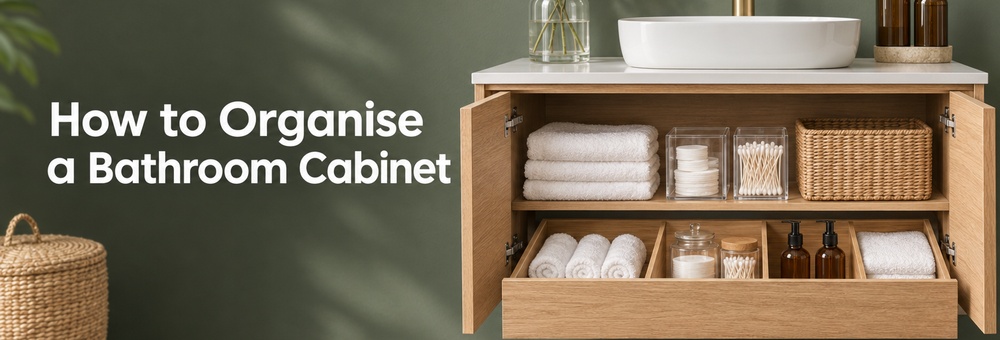
A well-organised bathroom cabinet makes everyday routines easier, keeps essential products within reach and helps maintain a clean, functional bathroom. However, toiletries, skincare products, grooming tools, cleaning supplies, medicines and spare towels can quickly take over limited storage space. Without a proper arrangement, even a spacious cabinet can become cluttered and difficult to manage.
Learning how to organise a bathroom cabinet involves more than arranging products neatly on shelves. It requires understanding what you use regularly, grouping similar items, making the best use of available space and choosing suitable storage solutions. A practical organisation system should also protect products from moisture, make cleaning easier and prevent frequently used items from getting buried behind less-used supplies.
Whether you have a compact vanity cabinet beneath the washbasin, a mirrored wall cabinet or a large bathroom storage unit, a few simple changes can improve its functionality. You do not necessarily need to purchase new organisers or renovate your bathroom. Often, removing expired products, using drawer dividers and assigning specific storage zones can make a noticeable difference.
This guide explains how to organise a bathroom cabinet step by step, with practical ideas for small and large bathrooms, under-sink storage, toiletries, towels, cleaning supplies and everyday essentials.
Table of Contents
- Why Is Bathroom Cabinet Organisation Important?
- Different Types of Bathroom Cabinets and Their Storage Uses
- How to Organise a Bathroom Cabinet: Step-by-Step Guide
- 15 Practical Bathroom Cabinet Organisation Ideas
- How to Organise a Small Bathroom Cabinet
- How to Organise an Under-Sink Bathroom Cabinet
- How to Organise Bathroom Cabinets for Different Household Needs
- Common Bathroom Cabinet Organisation Mistakes to Avoid
- How to Keep Your Bathroom Cabinet Organised
- Choosing Bathroom Storage Accessories for Better Organisation
- Frequently Asked Questions About Bathroom Cabinet Organisation
1. Why Is Bathroom Cabinet Organisation Important?
Bathroom cabinets are used to store a wide range of everyday essentials, from toothbrushes and skincare products to towels and cleaning supplies. When these items are stored without a proper system, finding something as simple as a face wash or spare toothpaste can become inconvenient.
An organised cabinet makes the bathroom easier to use while helping you maintain a cleaner and more comfortable space.
Makes Everyday Routines More Convenient
A well-organised cabinet allows you to find frequently used products without searching through multiple shelves or drawers. Keeping daily essentials together also makes morning and evening routines more efficient.
For example, toothbrushes, toothpaste, face wash and moisturiser can be placed in one accessible section, while less frequently used products can be stored on higher shelves.
Makes Better Use of Available Space
Bathroom storage is often limited, particularly in apartments and compact bathrooms. A cabinet may appear full even when a considerable amount of its space is being wasted.
Drawer dividers, stackable organisers, removable baskets and adjustable shelves can help use the available height and depth more effectively.
Helps Maintain Hygiene
Bathroom products are frequently exposed to water splashes, humidity and changes in temperature. Storing items correctly can help prevent packaging from becoming wet, reduce product contamination and make it easier to clean the cabinet.
Keeping dry products away from damp surfaces is particularly important for items such as tissues, cotton pads, spare towels and paper packaging.
Reduces Product Waste
When products are hidden behind other items, it becomes easy to forget what you already own. This can lead to duplicate purchases and expired toiletries.
Arranging products by category and keeping older items towards the front makes it easier to monitor what needs to be used or replaced.
Creates a Neater Bathroom Appearance
An organised cabinet reduces the number of products left on the washbasin counter, shelves and other visible surfaces. This creates a cleaner appearance and makes the bathroom easier to maintain.
2. Different Types of Bathroom Cabinets and Their Storage Uses
Before organising your bathroom, identify the type of cabinet you have. Different designs offer different storage opportunities, and the best arrangement depends on their dimensions, location and internal layout.
Wall-Mounted Bathroom Cabinets
Wall-mounted cabinets are attached to the bathroom wall, usually above or beside the washbasin. They are useful for storing everyday toiletries without occupying floor space.
They may include open shelves, enclosed compartments or a combination of both.
Best storage uses:
- Toothbrushes and toothpaste
- Face wash and skincare products
- Daily grooming essentials
- Small personal care items
- Frequently used bathroom accessories
Keep everyday products on easily accessible shelves. Avoid placing heavy containers or oversized bottles on shelves that are not designed to support their weight.
Mirrored Bathroom Cabinets
Mirrored cabinets combine storage with a mirror, making them particularly useful above washbasins. They provide enclosed storage for smaller products while helping keep the basin counter clear.
These cabinets are generally suitable for lightweight products used during daily grooming.
Best storage uses:
- Toothpaste and toothbrushes
- Skincare products
- Shaving accessories
- Small grooming tools
- Contact lens accessories
Avoid overcrowding mirrored cabinets. Leave enough space to open and close the doors comfortably, and ensure that containers do not interfere with hinges or internal fittings.
Under-Sink Bathroom Cabinets
Under-sink cabinets use the space beneath the washbasin. They are particularly useful for storing larger containers and products that do not need to remain within immediate reach.
The plumbing pipes may occupy part of the cabinet, so the storage arrangement should be planned around them.
Best storage uses:
- Spare toiletries
- Toilet paper and tissue packs
- Cleaning supplies
- Hair-care products
- Towels and bathroom essentials
Use baskets or pull-out organisers to make items at the back easier to access. Keep cleaning chemicals separate from personal care products.
Drawer-Based Bathroom Cabinets
Bathroom cabinets with drawers are useful for organising smaller products that tend to become mixed together on open shelves.
Different drawers can be assigned to specific categories, making it easier to locate products.
Best storage uses:
- Makeup and skincare accessories
- Hair ties and grooming tools
- Cotton pads and buds
- Travel-size toiletries
- Small personal care products
Drawer dividers help prevent items from moving around whenever the drawer is opened.
Open-Shelf Bathroom Cabinets
Open shelves provide convenient access to frequently used products and decorative items. However, they require more regular organisation because everything remains visible.
Best storage uses:
- Folded hand towels
- Storage baskets
- Soap dispensers
- Small decorative containers
- Frequently used bathroom accessories
Keep open shelves visually simple. Store smaller products inside baskets rather than displaying numerous individual containers.
3. How to Organise a Bathroom Cabinet: Step-by-Step Guide
The easiest way to organise a bathroom cabinet is to start with a complete clean-out rather than rearranging products that are already cluttered.
Follow these steps to create a storage system that is easy to maintain.
Step 1: Empty the Entire Cabinet
Remove everything from the cabinet, including products stored at the back, inside drawers and on upper shelves.
Place the items on a clean, dry surface so you can see exactly what you own.
Do not leave products inside simply because they appear useful. Reviewing everything together makes it easier to identify duplicate, expired and unnecessary items.
Step 2: Clean the Cabinet Thoroughly
Once the cabinet is empty, clean its shelves, drawers, corners and internal surfaces.
Use a suitable cleaner based on the cabinet material. A soft cloth and mild cleaning solution are generally appropriate for many finished surfaces, but always follow the manufacturer's care instructions.
Pay attention to:
- Dust collected in corners.
- Dried toothpaste or soap residue.
- Water marks and stains.
- Moisture around plumbing connections.
- Signs of mould or mildew.
- Damaged shelf liners or drawer surfaces.
Allow the cabinet to dry completely before returning any products.
If you notice a persistent damp smell, swelling, peeling or visible mould, identify and address the moisture source rather than simply covering the affected area.
Step 3: Check Expiry Dates and Product Condition
Go through each product and check its expiry date, condition and packaging.
Dispose of products that are expired, visibly damaged, contaminated or no longer suitable for use. Some cosmetics and skincare products also display a period-after-opening symbol, indicating how long they should generally be used after opening.
Check the following categories carefully:
- Skincare creams and serums
- Sunscreens
- Makeup products
- Hair-care products
- Medicines
- Contact lens solutions
- Personal hygiene products
- Cleaning supplies
Do not rely only on appearance. Some products may no longer be suitable even if their packaging looks normal.
Medicines should be stored according to their labels and pharmacist instructions. Do not keep products that require refrigeration or special temperature conditions inside a bathroom cabinet unless the storage instructions specifically permit it.
Step 4: Group Products by Category
Once unnecessary items have been removed, divide the remaining products into categories.
A practical bathroom cabinet can have separate groups for:
| Category | Examples |
|---|---|
| Daily skincare | Cleanser, moisturiser, serum |
| Oral care | Toothbrush, toothpaste, floss |
| Hair care | Shampoo, conditioner, hair serum |
| Grooming | Razor, shaving cream, grooming tools |
| Personal hygiene | Deodorant, sanitary products |
| Bath essentials | Body wash, bath products |
| Towels and tissues | Hand towels, tissues, spare toilet rolls |
| Cleaning supplies | Bathroom cleaner, cleaning cloths |
| Spare products | Unopened toiletries and refill packs |
The purpose is to ensure that similar items remain together. This reduces the time spent searching for products and makes it easier to identify what needs replenishing.
Step 5: Decide What Belongs Inside the Cabinet
Not every bathroom item needs to be stored in the same place.
Daily-use toiletries should remain easily accessible, while bulky refill packs and less frequently used items can be stored in lower or higher compartments.
Consider the following arrangement:
- Eye-level shelves: Daily skincare and grooming essentials.
- Upper shelves: Lightweight products used occasionally.
- Lower shelves: Larger bottles and spare toiletries.
- Drawers: Small items and accessories.
- Separate baskets: Cleaning supplies and personal hygiene products.
Avoid storing heavy products on high shelves where they may be difficult to reach safely.
Step 6: Measure the Available Storage Space
Before purchasing storage organisers, measure the cabinet's internal dimensions.
Check the width, height and depth of each shelf and drawer. Also account for hinges, door movement, plumbing pipes and other obstructions.
This helps you select organisers that fit without wasting space.
For under-sink cabinets, measure around the plumbing rather than assuming that the entire cabinet is available for storage.
Step 7: Add Storage Organisers
Use storage organisers to create separate sections for different product categories.
Useful options include:
- Acrylic storage boxes
- Plastic baskets
- Drawer dividers
- Stackable containers
- Pull-out trays
- Small lidded boxes
- Adjustable shelf organisers
Choose moisture-resistant materials that are easy to clean. Avoid placing untreated cardboard boxes directly inside a humid bathroom cabinet.
Transparent organisers can be particularly useful because their contents remain visible without requiring you to open every container.
Step 8: Arrange Products According to Usage Frequency
Place products you use every day in the most accessible sections.
For example, toothpaste, face wash and moisturiser should not be hidden behind spare shampoo bottles or unopened products.
A simple rule is:
- Daily-use products: Front and eye-level storage.
- Weekly-use products: Middle or secondary shelves.
- Occasional-use products: Upper or lower shelves.
- Bulk refills: Designated storage area.
This arrangement keeps frequently used items within reach while reducing unnecessary movement inside the cabinet.
Step 9: Return Products and Label Containers
Once the storage layout is ready, place products in their designated sections.
If you use opaque baskets or identical containers, add simple labels such as:
- Skincare
- Hair care
- Oral care
- Grooming
- Refills
- Cleaning
- Towels
Labels are particularly helpful when multiple household members share the same bathroom.
Step 10: Review the Arrangement
Before considering the task complete, open and close every drawer and cabinet door.
Check that:
- Products are easy to reach.
- Containers are stable.
- Heavy items are stored safely.
- Plumbing remains accessible.
- Nothing obstructs hinges or doors.
- Products are not overcrowded.
- Frequently used items remain visible.
An effective storage arrangement should make everyday use easier, not simply make the cabinet look attractive.
4. 15 Practical Bathroom Cabinet Organisation Ideas
Once the basic cleaning and sorting are complete, you can improve your storage arrangement with a few practical ideas.
1. Use Drawer Dividers for Small Products
Small products such as lip balms, hair ties, cotton pads, nail clippers and grooming accessories can easily become mixed together.
Drawer dividers create separate compartments and prevent smaller items from moving around.
Choose adjustable dividers if your drawer dimensions are unusual. This allows you to change the layout when your storage requirements change.
2. Store Daily Essentials Together
Keep products used during the same routine in one section.
For example, create a morning skincare group containing cleanser, moisturiser and sunscreen. Keep evening skincare products in a separate organiser if they are different.
This reduces the need to move products between shelves and makes the cabinet easier to maintain.
3. Use Clear Storage Containers
Transparent containers allow you to identify products quickly.
They are useful for storing cotton pads, cotton buds, makeup accessories and small grooming items.
Choose containers with lids for products that should remain protected from dust and moisture.
4. Use Stackable Organisers
Stackable storage boxes help use vertical space inside cabinets with tall shelves.
Instead of placing all products in a single row, use two or more levels where the shelf height permits.
Make sure the containers are stable and do not prevent you from accessing products stored underneath.
5. Create a Separate Section for Towels
Folded hand towels and washcloths can be stored in a designated cabinet section.
Arrange them in small stacks so that they can be removed without disturbing the remaining towels.
Ensure that towels are completely dry before storing them. Damp fabrics can develop unpleasant odours and encourage mould growth in enclosed spaces.
6. Use Baskets for Backup Products
Unopened toiletries, spare shampoo bottles, toothpaste packs and refill products can be grouped in baskets.
This prevents bulk products from occupying the most accessible shelves.
You can also separate products by category so that you know exactly where to find replacements.
7. Store Cleaning Products Separately
Bathroom cleaning products should have a separate storage area away from skincare, toiletries, medicines and personal hygiene products.
Keep cleaning chemicals in their original containers with labels intact. Follow the storage instructions and keep them away from children and pets.
Do not transfer chemicals into unlabelled containers or mix different cleaning products.
8. Use the Inside of Cabinet Doors Carefully
The inside of a cabinet door can provide additional storage space.
Depending on the cabinet design, you may be able to add small hooks or organisers for lightweight items such as hair accessories and grooming tools.
Before installing anything, check that the organiser does not interfere with hinges, shelves or the cabinet's closing mechanism.
Avoid attaching heavy products to doors that are not designed to carry additional weight.
9. Use Pull-Out Baskets for Under-Sink Storage
Pull-out baskets make it easier to access products stored towards the back of an under-sink cabinet.
They are particularly useful for bulky bottles, cleaning cloths and refill packs.
Choose baskets that fit around the plumbing and can be removed easily for cleaning.
10. Keep Medicines in a Suitable Storage Location
Bathrooms are not always the best place to store medicines because humidity and temperature fluctuations can affect certain products.
Check the storage instructions on each medicine. Store items in a cool, dry location where required, away from children and pets.
If a medicine needs specific temperature conditions, follow the packaging or pharmacist's guidance rather than keeping it in a standard bathroom cabinet.
11. Use Small Trays for Frequently Used Products
A small removable tray can hold everyday products such as face wash, moisturiser and deodorant.
The tray makes it easier to move several products together when cleaning the shelf.
Choose a tray with a washable surface and enough space to keep containers upright.
12. Organise Products by Size
Place taller bottles at the back and smaller containers towards the front, provided that the shelf design allows easy access.
This helps prevent smaller products from becoming hidden behind large shampoo or lotion bottles.
For deep cabinets, consider a stepped organiser so that products stored towards the back remain visible.
13. Keep Frequently Used Accessories Accessible
Items such as cotton pads, toothbrushes, hairbrushes and shaving accessories should be stored in easy-to-reach compartments.
A well-planned bathroom storage system should reduce the need to search through several containers every time you need something.
14. Use Moisture-Resistant Storage Materials
Bathrooms are exposed to humidity and occasional water splashes. Select storage containers that can withstand these conditions.
Suitable choices may include:
- Acrylic
- Plastic
- Stainless steel
- Properly finished metal
- Moisture-resistant coated materials
Avoid untreated cardboard, fabric baskets that remain damp and materials that may rust or deteriorate when exposed to moisture.
15. Keep the Cabinet's Appearance Consistent
A consistent arrangement makes the cabinet easier to maintain.
You can use matching containers, similar labels and a limited number of storage materials to create a coordinated appearance.
However, appearance should not take priority over practicality. Products must remain easy to identify, safe to access and stored according to their requirements.
5. How to Organise a Small Bathroom Cabinet
Small bathrooms require a more considered storage arrangement because cabinet space is often limited. A compact vanity may need to accommodate everyday toiletries, spare products and cleaning essentials without becoming overcrowded.
The following ideas can help you organise a small bathroom cabinet more effectively.
Use Vertical Storage
If the cabinet has sufficient internal height, stackable organisers can create additional storage levels.
This allows you to separate products without occupying more floor area.
Before stacking containers, check that the upper boxes are stable and that the lower products remain accessible.
Prioritise Essential Products
Avoid storing every bathroom product inside a small cabinet.
Keep daily essentials nearby and move occasional-use products, bulk refills and spare items to another suitable storage location.
This reduces clutter and makes the cabinet easier to use.
Choose Compact Organisers
Large storage boxes may consume more space than they save.
Measure the cabinet before purchasing organisers and select containers that fit its dimensions.
Small modular organisers are often more useful than one oversized box because they allow you to create separate categories.
Make Use of Wall Space
If the bathroom has limited cabinet storage, consider suitable wall-mounted shelves or storage accessories.
Position them where they remain accessible without interfering with doors, shower areas or movement.
Use appropriate fixtures and ensure that wall-mounted storage is securely installed.
Keep the Countertop Clear
Avoid placing all your toiletries around the washbasin.
Keep only the products needed during immediate use on the counter and store the remaining items inside the cabinet.
A clear countertop makes a compact bathroom feel more organised and easier to clean.
Choose a Cabinet That Suits the Bathroom Layout
For a small bathroom, a wall-mounted cabinet or mirrored storage unit may be more practical than a bulky floor-standing unit.
Consider the basin dimensions, door clearance, available wall space and plumbing arrangement before choosing a storage design.
6. How to Organise an Under-Sink Bathroom Cabinet
Under-sink cabinets often have more storage capacity than mirrored or wall-mounted cabinets. However, their layout can be difficult to manage because the basin waste pipe and water supply connections occupy valuable space.
The best way to organise this area is to create storage zones around the plumbing rather than trying to fill every available corner.
Work Around the Plumbing
Start by identifying the position of the drain pipe, bottle trap and water supply connections.
Leave enough clearance around these components so that they remain accessible for inspection and maintenance.
Do not place heavy containers against pipe connections or use the plumbing as a support for storage organisers.
Use U-Shaped Organisers
U-shaped organisers are designed to fit around a central pipe or obstruction.
They can make better use of the space beneath a washbasin, particularly when the plumbing runs through the middle of the cabinet.
Check the dimensions carefully before purchasing one.
Keep Heavy Products at the Bottom
Larger cleaning bottles and refill packs can be stored on the lower cabinet floor, provided that they are secured and kept away from any moisture or potential leaks.
Avoid placing heavy items on high shelves where they may fall when the cabinet is opened.
Separate Cleaning and Personal Care Products
Keep cleaning products in a designated basket and personal care items in a different section.
This is particularly important in shared bathrooms where multiple people access the same cabinet.
Store chemicals in their original containers and follow the manufacturer's safety instructions.
Keep Spare Towels Away from Plumbing
If you store towels beneath the basin, place them in a separate dry section away from pipes and potential leak points.
Avoid storing large quantities of fabric in a cabinet that regularly becomes damp.
Check for Leaks Regularly
Under-sink cabinets can conceal small plumbing leaks.
Periodically inspect the pipe connections and cabinet base for moisture, water marks, swelling or unpleasant smells.
If you notice a leak, remove products from the affected area and arrange a repair before returning them to the cabinet.
7. How to Organise Bathroom Cabinets for Different Household Needs
The ideal cabinet arrangement depends on how many people use the bathroom and what products they need.
A shared bathroom may require more storage categories than a guest bathroom or an individual-use bathroom.
For a Single-Person Household
A single-person bathroom cabinet can usually be organised around daily routines.
Keep skincare, oral care and grooming products in separate sections. Store spare toiletries and cleaning supplies in lower compartments.
Avoid buying too many storage containers if the number of products is limited.
For Couples Sharing a Bathroom
When two people share a bathroom, assigning separate storage sections can reduce clutter and confusion.
For example:
- Left drawer: Person one's daily products.
- Right drawer: Person two's daily products.
- Shared shelf: Toothpaste, hand wash and other common essentials.
- Lower cabinet: Spare toiletries and cleaning products.
This arrangement allows both users to access their products without mixing everything together.
For Families with Children
Family bathrooms often contain additional products such as children's toiletries, bath accessories and spare towels.
Use separate baskets for each category and keep potentially hazardous products out of children's reach.
Medicines, cleaning chemicals, sharp grooming tools and other potentially dangerous items should be stored securely according to their safety instructions.
For Guest Bathrooms
Guest bathrooms generally require fewer products.
Keep essentials such as hand towels, soap, tissues and spare toiletries easily accessible.
Store personal products and cleaning supplies separately so that the cabinet remains simple and uncluttered.
8. Common Bathroom Cabinet Organisation Mistakes to Avoid
Even after spending time organising a bathroom cabinet, certain habits can quickly bring the clutter back.
Avoid these common mistakes to maintain a practical storage arrangement.
1. Keeping Expired Products
Expired skincare, cosmetics and toiletries occupy valuable space and may no longer be suitable for use.
Check product labels periodically and dispose of items according to their instructions.
2. Buying Organisers Before Measuring
Storage boxes that are too large or too small can waste cabinet space.
Measure the shelves and drawers before purchasing organisers. Account for plumbing, hinges and door clearance.
3. Overfilling Shelves
An overcrowded cabinet makes it difficult to locate products and increases the likelihood of items falling when shelves are opened.
Leave enough space to remove containers without disturbing the remaining products.
4. Storing Wet Towels Inside Closed Cabinets
Damp towels can develop unpleasant smells and encourage mould growth.
Always allow towels to dry completely before storing them in enclosed spaces.
5. Mixing Cleaning Products with Toiletries
Cleaning chemicals should remain separate from personal care products, medicines and hygiene essentials.
Keep all products in their original labelled packaging and follow their storage instructions.
6. Ignoring Moisture and Plumbing Leaks
A cabinet may look organised while moisture gradually damages its internal surfaces.
Check the cabinet for dampness, water stains, swelling and leaking pipe connections.
7. Using Unstable Stacking Containers
Stacked containers that move whenever the cabinet is opened can make storage inconvenient.
Choose organisers with stable bases and ensure that their dimensions are suitable for the shelf.
8. Storing Heavy Items on High Shelves
Heavy bottles and containers can fall when removed from elevated shelves.
Keep heavier items lower and lighter products higher up.
9. Keeping Products Without a Clear Purpose
Unused samples, duplicate toiletries and products purchased but never used can quickly occupy storage space.
Keep only products that are useful and suitable for your household.
10. Creating an Arrangement That Is Difficult to Maintain
A cabinet should not require extensive rearrangement every time someone uses it.
Use simple categories and assign each product a permanent storage location.
9. How to Keep Your Bathroom Cabinet Organised
Organising a cabinet once is useful, but maintaining it is what keeps the storage system functional over time.
A simple maintenance routine can prevent products from accumulating and reduce the need for frequent reorganising.
Follow a Weekly Reset
Spend a few minutes each week checking the cabinet.
Return products to their designated places, remove empty containers and wipe away any visible residue.
This small habit can prevent clutter from building up.
Review Products Every Month
Check which products are running low, which items are no longer being used and whether any packaging has become damaged.
Keep a small list of essential products that need replenishing instead of purchasing duplicates unnecessarily.
Clean the Cabinet Periodically
Remove products from the shelves and clean the internal surfaces when required.
Pay attention to corners, drawer runners and areas beneath storage containers.
Allow surfaces to dry before returning the products.
Check Expiry Dates Regularly
Review skincare, cosmetics, medicines and other products according to their labelled expiry or storage guidance.
Dispose of products that are no longer suitable.
Reassess the Storage Layout When Needed
Your storage requirements may change over time.
New products, household members or bathroom renovations may require a different arrangement.
Adjust the storage categories rather than forcing new items into an already overcrowded cabinet.
Maintain the Bathroom Around the Cabinet
A well-organised cabinet works best when the surrounding bathroom is also maintained.
Keep the washbasin counter clear, clean the mirror regularly and ensure that accessories and shelves are not overcrowded.
For additional storage and organisation options, explore Bathroom Accessories designed to complement different bathroom layouts.
10. Choosing Bathroom Storage Accessories for Better Organisation
The right storage accessories can improve the way a bathroom cabinet functions. However, they should be selected according to the cabinet's dimensions, the products being stored and the bathroom's overall layout.
Consider the following options when improving your storage arrangement.
Storage Baskets
Baskets are useful for grouping similar products. They can be placed inside under-sink cabinets, on open shelves or within larger storage units.
Choose washable, moisture-resistant baskets that are easy to remove.
Shelves and Glass Storage
Additional shelves can help create separate storage levels where wall space and installation conditions permit.
Glass shelves may be suitable for certain bathroom layouts, but they should be installed securely and kept within their specified load limits.
Hooks and Towel Holders
Hooks and towel holders can free up cabinet space by providing designated locations for frequently used towels and accessories.
Choose a suitable position that allows towels to dry properly and does not obstruct bathroom movement.
Mirrors with Storage
A mirrored cabinet combines a reflective surface with enclosed storage, making it useful in bathrooms where counter and wall space are limited.
Check the internal dimensions and shelf configuration before choosing one.
Coordinate Accessories with Existing Fixtures
Storage accessories should complement the bathroom's existing finishes and design.
Consider the material, finish, mounting method and cleaning requirements when selecting products.
Explore Bath Accessories for coordinated bathroom essentials such as shelves, holders and other functional fittings.
11. Frequently Asked Questions About Bathroom Cabinet Organisation
1. What is the best way to organise a bathroom cabinet?
The best approach is to empty the cabinet, clean its surfaces, remove expired products and group the remaining items by category. Use baskets, drawer dividers and stackable organisers to create separate storage zones. Keep everyday essentials within easy reach and store occasional-use products elsewhere.
2. How do I organise a small bathroom cabinet?
Prioritise essential products and use compact organisers that fit the cabinet's dimensions. Stackable containers, drawer dividers and small baskets can help make better use of vertical space. Keep bulk refills and occasional-use products outside the main daily-use storage area.
3. What should I keep in a bathroom cabinet?
A bathroom cabinet can hold daily toiletries, skincare products, grooming accessories, spare towels and other bathroom essentials. The exact arrangement depends on available space and the products used by the household. Keep medicines and cleaning chemicals separate and follow their storage instructions.
4. How do I organise an under-sink bathroom cabinet?
Start by identifying the plumbing layout and leaving sufficient access around pipes and connections. Use pull-out baskets, U-shaped organisers and separate containers to group products. Keep heavy items low and store towels away from potential leaks or damp areas.
5. Should towels be stored in a bathroom cabinet?
Yes, provided that the towels are completely dry before being placed inside. Damp towels can develop unpleasant odours and encourage mould growth. Store clean, dry towels in a separate section away from plumbing connections and cleaning products.
6. How can I organise bathroom products without buying organisers?
You can use existing containers, small boxes and removable trays that are clean, stable and suitable for bathroom conditions. Group products by category, arrange them according to usage frequency and avoid overcrowding shelves. There is no need to purchase new organisers if the existing cabinet can accommodate a simple storage system.
7. Where should I store cleaning products in a bathroom?
Cleaning products should be stored in a separate, secure section away from toiletries, medicines and personal care products. Keep them in their original labelled containers and follow the manufacturer's storage instructions. Ensure they are inaccessible to children and pets where necessary.
8. How do I prevent moisture inside a bathroom cabinet?
Ensure that the bathroom is properly ventilated and avoid storing wet products or damp towels inside closed cabinets. Wipe water splashes promptly, check plumbing connections for leaks and allow the cabinet to dry after cleaning. Address persistent humidity or dampness rather than relying only on storage containers.
9. How often should I clean a bathroom cabinet?
Remove visible dirt and return products to their designated places regularly. A more thorough clean can be carried out periodically, depending on usage and moisture levels. Check product expiry dates and packaging condition as part of the maintenance routine.
10. How do I organise a shared bathroom cabinet?
Assign separate shelves, drawers or baskets to each household member. Keep common products such as hand wash and toothpaste in a shared section, while personal skincare and grooming items remain separate. Clear labels can make the arrangement easier to maintain.
11. Are clear or opaque storage containers better for bathroom cabinets?
Clear containers make it easier to identify products without opening them, while opaque containers can create a more uniform appearance and conceal visual clutter. The best choice depends on the type of products being stored and how frequently they are used. For items that need to remain protected from light or moisture, follow the product's storage instructions.
12. How can I make a bathroom cabinet look less cluttered?
Use matching containers, group similar products and avoid keeping unnecessary items on display. Store daily essentials in accessible sections and move spare products to lower or less frequently used shelves. Leave some empty space so that the cabinet remains easy to use.
13. Can I store medicines in a bathroom cabinet?
A bathroom cabinet may not be suitable for medicines because humidity and temperature fluctuations can affect certain products. Always follow the storage instructions on the packaging or advice from a pharmacist. Keep medicines secure and away from children.
14. What should I avoid storing under the bathroom sink?
Avoid storing items that are sensitive to moisture or heat, particularly if the cabinet is prone to leaks or dampness. Medicines, electrical devices, paper packaging and fabrics should be stored elsewhere if the conditions are unsuitable. Cleaning chemicals should remain separate from personal care products.
15. How do I organise a bathroom cabinet for a family?
Create separate storage sections for each family member and shared bathroom essentials. Use labelled baskets for toiletries, towels and grooming products. Keep cleaning chemicals, medicines and sharp tools securely stored, following the relevant safety instructions.
Conclusion
A well-organised bathroom cabinet improves everyday convenience, makes better use of available storage space and helps maintain a cleaner bathroom. The most effective approach is to begin by removing unnecessary products, cleaning the cabinet and grouping the remaining essentials into practical categories.
Use drawer dividers, baskets, stackable organisers and designated storage zones to make the most of the available space. Keep frequently used products accessible, store towels only when dry and separate cleaning supplies from personal care items.
Whether you have a compact mirrored cabinet, a wall-mounted storage unit or a large under-sink vanity, a simple and consistent arrangement can make the bathroom easier to use and maintain.
Regular cleaning, product checks and a few minutes of weekly organisation will help keep the cabinet clutter-free over time. With the right storage arrangement and suitable bathroom accessories, you can create a space that is both functional and visually organised.