


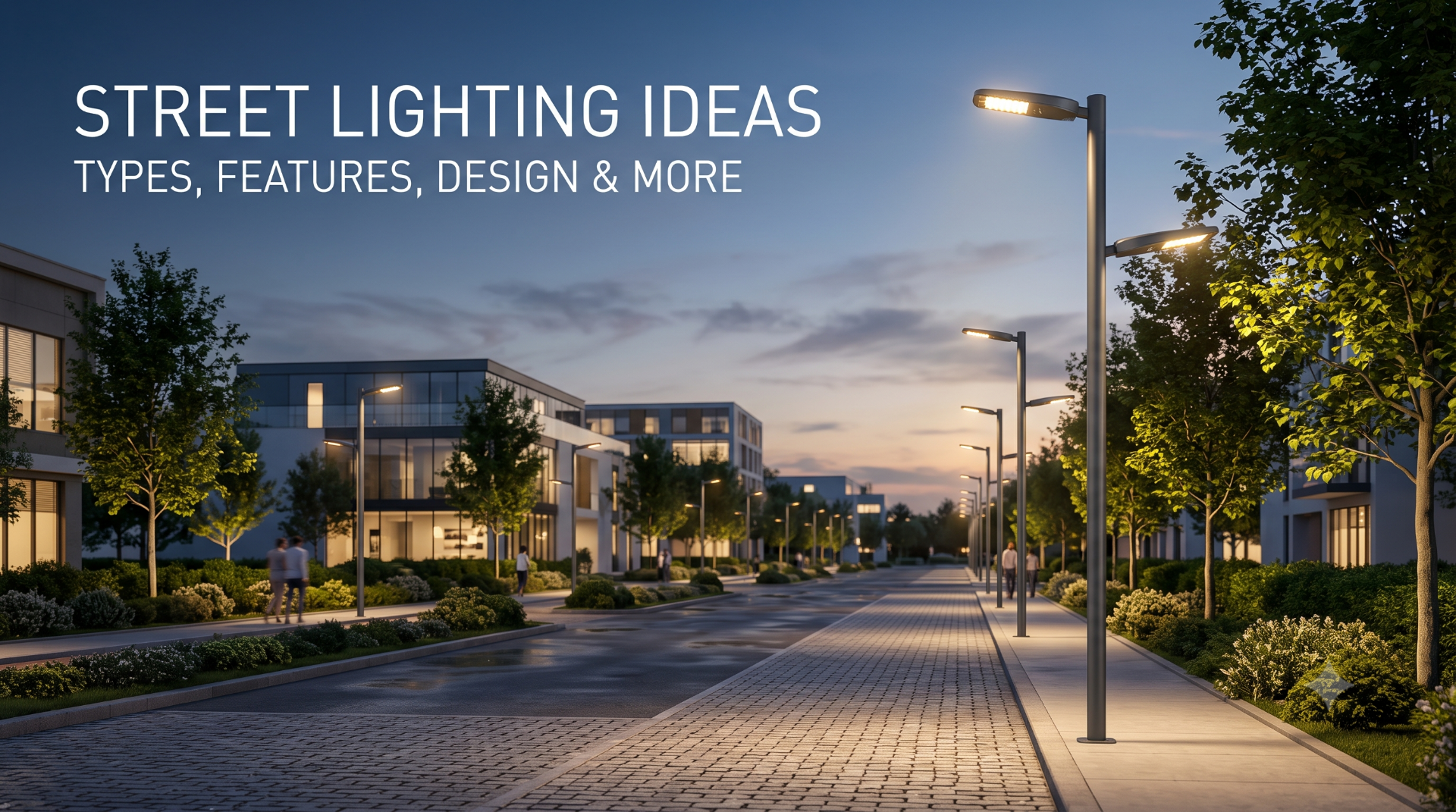
Once daylight fades, the quality of outdoor lighting begins to influence how streets, pathways and public spaces are experienced. A well-lit road feels easier to navigate, intersections become more legible, pedestrians can identify their surroundings more comfortably, and buildings and landscapes remain visually connected after dark.
But effective street lighting is not simply a matter of installing brighter fixtures. The position of the light, the width of the road, the surrounding architecture, traffic movement, pedestrian activity and the character of the area all influence the right approach.
This is particularly relevant across the UAE, where outdoor environments can range from residential streets and landscaped communities to commercial districts, highways, parking areas and large urban developments. Each setting demands a considered relationship between illumination, coverage and visual comfort.
A good lighting scheme should therefore answer a straightforward question: where is light actually needed, and how should it reach that space?
What Is Street Lighting?
Street lighting refers to outdoor lighting designed to illuminate roads, streets, pathways and other circulation areas after dark.
Its primary purpose is functional. It helps people see the route ahead and understand the surrounding environment. At the same time, contemporary street lighting can contribute to the appearance of streetscapes and the visual identity of residential, commercial and public environments.
Jaquar's roadway lighting portfolio includes solutions intended for roads, highways, tunnels and underpasses, with different street-light configurations suited to different applications.
The right solution depends less on the name of the fixture and more on the environment in which it will operate.
Why Good Street Lighting Matters
Street lighting performs several functions simultaneously.
Better visibility
Adequate illumination helps drivers, cyclists and pedestrians understand the road and surrounding environment.
Clearer movement
Lighting can help distinguish roads, junctions, pathways and pedestrian areas, particularly after sunset.
Greater visual comfort
A well-planned lighting arrangement avoids unnecessary glare and extreme variations between bright and dark areas.
Stronger sense of place
Outdoor lighting can reinforce the character of a residential development, commercial district or public environment.
More consistent nighttime appearance
A coordinated lighting scheme prevents isolated bright spots and poorly illuminated sections.
The objective is not maximum brightness everywhere. It is appropriate illumination where it matters.
Types of Street Lighting
There is no single street-lighting arrangement that works for every environment. Different road and outdoor conditions call for different approaches.
1. Road Street Lighting
Roadway lighting is designed for conventional streets and roads where vehicles and pedestrians share the surrounding environment.
The fixture needs to distribute light across the road rather than concentrating illumination directly underneath the pole.
Jaquar's street-light range includes roadway solutions designed around broad outdoor applications, including roads and highways.
For residential streets, the visual character of the fixture can be particularly important. The lighting should provide functional visibility while remaining visually compatible with surrounding homes, landscaping and architecture.
2. Highway Lighting
Highways require a different lighting approach from slower residential roads.
The distances are greater, traffic moves faster and consistent visibility becomes particularly important.
Street lights designed for highway environments therefore need to provide appropriate coverage across larger road sections. Jaquar's roadway portfolio specifically identifies highway applications alongside road lighting.
The design should consider road geometry, pole placement, traffic movement and surrounding conditions rather than simply increasing fixture brightness.
3. Tunnel and Underpass Lighting
Tunnels and underpasses create an enclosed environment where natural daylight is restricted or absent.
Lighting needs to provide continuity through the space and help users understand the road ahead.
Jaquar identifies dedicated street-light applications for tunnels and underpasses within its roadway lighting portfolio.
Here, consistency becomes particularly important. Abrupt changes between illuminated and poorly lit sections can make the environment uncomfortable.
4. Residential Street Lighting
Residential streets generally require a more balanced approach.
The lighting needs to support vehicle movement and pedestrian visibility without creating an excessively bright environment around homes.
Warm or neutral visual tones may be considered where the surrounding architecture and landscape call for a softer appearance, while the exact lighting choice should always follow the project's functional requirements.
5. Commercial and Mixed-Use Streets
Commercial areas tend to have greater pedestrian movement, signage, entrances, parking and architectural features.
Street lighting can therefore form part of a broader outdoor lighting strategy.
The road itself may use dedicated street lights, while adjacent outdoor areas may use other outdoor-lighting categories to provide continuity between the street, building frontage and surrounding landscape.
Street Lighting Features That Matter
Modern street lights include a range of features, but not every technical specification needs to become the centre of the design discussion.
The most important considerations are practical.
1. Appropriate Light Distribution
Light should reach the intended area rather than simply creating a bright patch beneath the fixture.
Jaquar's roadway lighting range includes asymmetric beam distribution, which is suited to directing illumination across roadway areas.
This is particularly useful because roads are horizontal surfaces. The objective is to distribute light along the road rather than waste illumination in unwanted directions.
2. Outdoor Protection
Street lights operate in exposed environments.
Rain, dust, heat and other outdoor conditions need to be considered when selecting a fixture.
Jaquar's roadway lighting products include IP65 and IP66-rated options, reflecting their intended use in outdoor environments.
For project planning, the appropriate protection level should be selected according to the installation environment rather than treated as a decorative specification.
3. Durable Construction
Outdoor fixtures need to withstand regular environmental exposure.
Jaquar describes its roadway fixtures with aluminium die-cast housings and protective finishes, along with polycarbonate covers on the roadway range.
The practical takeaway is simple: outdoor lighting should be selected with long-term exposure in mind.
4. Suitable Colour Appearance
Street lighting can be available in different colour appearances.
Jaquar's roadway portfolio includes warm white, neutral white and cool white options.
The choice should be guided by the setting.
A residential development may call for a softer visual character, while a highway or industrial environment may prioritise a clearer, more neutral appearance.
Consistency across the same project is usually more important than choosing a particular colour simply because it is popular.
Street Lighting Design Ideas for Different Spaces
1. Residential Streets
For residential communities, street lights should work with the architecture rather than dominate it.
Keep fixture placement consistent along the road and avoid creating alternating sections of excessive brightness and darkness.
The surrounding landscape should also be considered. Trees, walls and boundary structures can affect how light is perceived.
2. Gated Communities
Gated developments often contain several connected environments:
- Entry roads
- Internal streets
- Visitor parking
- Pedestrian routes
- Landscape areas
Rather than using exactly the same lighting treatment everywhere, create a hierarchy.
The main entrance can have a stronger visual presence, while internal streets can use a more restrained approach.
3. Commercial Districts
Commercial streets need to accommodate both vehicle movement and pedestrian activity.
Street lighting can establish the basic road illumination, while other outdoor fixtures can support entrances, pathways and architectural areas.
The goal is to create continuity without making every part of the environment equally bright.
4. Parking Areas
Parking spaces require clear visibility across vehicle routes and pedestrian movement areas.
The lighting arrangement should minimise dark pockets between parked vehicles while avoiding unnecessary glare for drivers.
5. Landscaped Streets
Where roads run alongside landscaped areas, street lighting can be combined visually with other outdoor lighting.
However, landscape lighting should not compete with the functional road illumination.
A restrained approach usually works better: the street remains the primary illuminated circulation route while selected landscape features receive secondary emphasis.
How to Choose Street Lighting for a Project
Choosing the right fixture begins with the environment rather than the catalogue.
Consider the road width
A narrow residential road has different lighting requirements from a multi-lane roadway.
Consider mounting position
The relationship between the fixture, pole and road determines how light reaches the surface.
Consider surrounding buildings
Tall buildings, boundary walls and structures can influence shadows and reflected light.
Consider pedestrians
A road with heavy pedestrian activity needs to be considered differently from a route used almost exclusively by vehicles.
Consider the operating environment
Outdoor exposure, dust, moisture and heat should all form part of the selection process.
Consider visual consistency
A lighting scheme should look intentional from one end of the street to the other.
Street Lighting and Urban Design
Street lights are functional infrastructure, but they also become part of the streetscape.
The pole, fixture shape and light distribution are visible architectural elements.
For modern developments, streamlined street-light designs can support clean architectural lines. In more traditional environments, the fixture can be visually quieter so that buildings and landscape remain the focus.
The best approach is rarely to make the street light the star of the environment.
Instead, it should belong naturally to the space.
How to Avoid Common Street Lighting Mistakes
Using excessive brightness
More illumination does not automatically mean better visibility. Excessive brightness can create glare and reduce visual comfort.
Ignoring surrounding areas
A brightly lit road surrounded by extremely dark pedestrian zones can still feel poorly designed.
Selecting fixtures before understanding the road
Fixture choice should follow the application.
Creating inconsistent spacing
Irregular placement can result in uneven illumination and a visually disjointed streetscape.
Ignoring maintenance
Fixtures should be accessible and appropriate for long-term outdoor use.
Mixing unrelated colour appearances
Large differences in light colour can make adjacent sections feel disconnected.
Street Lighting Ideas for a More Balanced Streetscape
A few design principles can significantly improve the final result.
Keep the road visually dominant
Functional road illumination should remain the primary layer.
Use secondary outdoor lighting carefully
Landscape, pathway and architectural lighting can support the environment without competing with road illumination.
Maintain visual rhythm
Consistent fixture spacing helps create a coherent streetscape.
Match the fixture to the architecture
A modern development generally benefits from lighting that complements its architectural language.
Think beyond the daytime view
Street lights become architectural objects at night. Their daytime appearance and nighttime effect both matter.
Street Lighting for the UAE Environment
Outdoor lighting in the UAE needs to be considered within a demanding climate.
Dust, high temperatures and exposure to outdoor conditions can affect lighting equipment over time. This makes outdoor-rated construction and suitable protection important considerations.
However, the correct solution should always be based on the specific project environment.
A residential community, coastal development, commercial road and industrial area may face different exposure conditions.
The lighting specification should therefore consider the actual site rather than relying on a generic outdoor-lighting formula.
A Practical Street Lighting Checklist
Before finalising a project, ask:
- What type of road or outdoor route is being illuminated?
- How wide is the area?
- How much vehicle and pedestrian movement is expected?
- Where will the fixtures be mounted?
- Is the light distributed evenly across the intended area?
- Could the fixtures create glare?
- Are they appropriately protected for outdoor conditions?
- Does the colour appearance suit the surrounding environment?
- Does the lighting work with nearby architecture and landscape?
- Can the fixtures be maintained efficiently?
Answering these questions early can prevent many problems later.
Conclusion
Street lighting is most effective when it is designed around the way a space is actually used. Roads, highways, residential streets, commercial areas, parking zones and tunnels all have different requirements, and the lighting should respond accordingly.
The strongest designs balance visibility, consistency, environmental protection and visual character. Rather than treating brightness as the only measure of performance, designers should consider distribution, placement, surrounding architecture and the experience of people using the space after dark.
Jaquar's roadway lighting portfolio includes street-light solutions for roads, highways, tunnels and underpasses, with options designed for outdoor conditions and different lighting requirements.
Choosing a coordinated lighting portfolio can also make it easier to maintain consistency across different outdoor environments. Jaquar's wider lighting range provides complementary outdoor categories that can help create a more considered relationship between functional illumination and the surrounding landscape.
FAQs
- What are the main types of street lighting?
The main applications include road lighting, highway lighting, residential street lighting, commercial-area lighting and dedicated lighting for tunnels and underpasses. The appropriate solution depends on the road, surroundings and required coverage. - What should I consider when choosing street lights?
Consider the road width, mounting arrangement, required light distribution, outdoor exposure, surrounding architecture, pedestrian movement and the desired visual character. - Why is asymmetric light distribution useful for street lighting?
Roads are relatively wide horizontal surfaces, so directing light across the roadway can provide more useful illumination than concentrating light directly below the fixture. Jaquar's roadway range includes asymmetric beam options. - What IP rating is suitable for outdoor street lighting?
The appropriate rating depends on the installation environment. Jaquar's roadway lighting portfolio includes IP65 and IP66 options designed for outdoor applications. - Should street lights all have the same colour of light?
Within a coordinated project, maintaining a consistent colour appearance generally creates a more coherent streetscape. The appropriate choice should depend on the road type, surroundings and intended visual environment.