


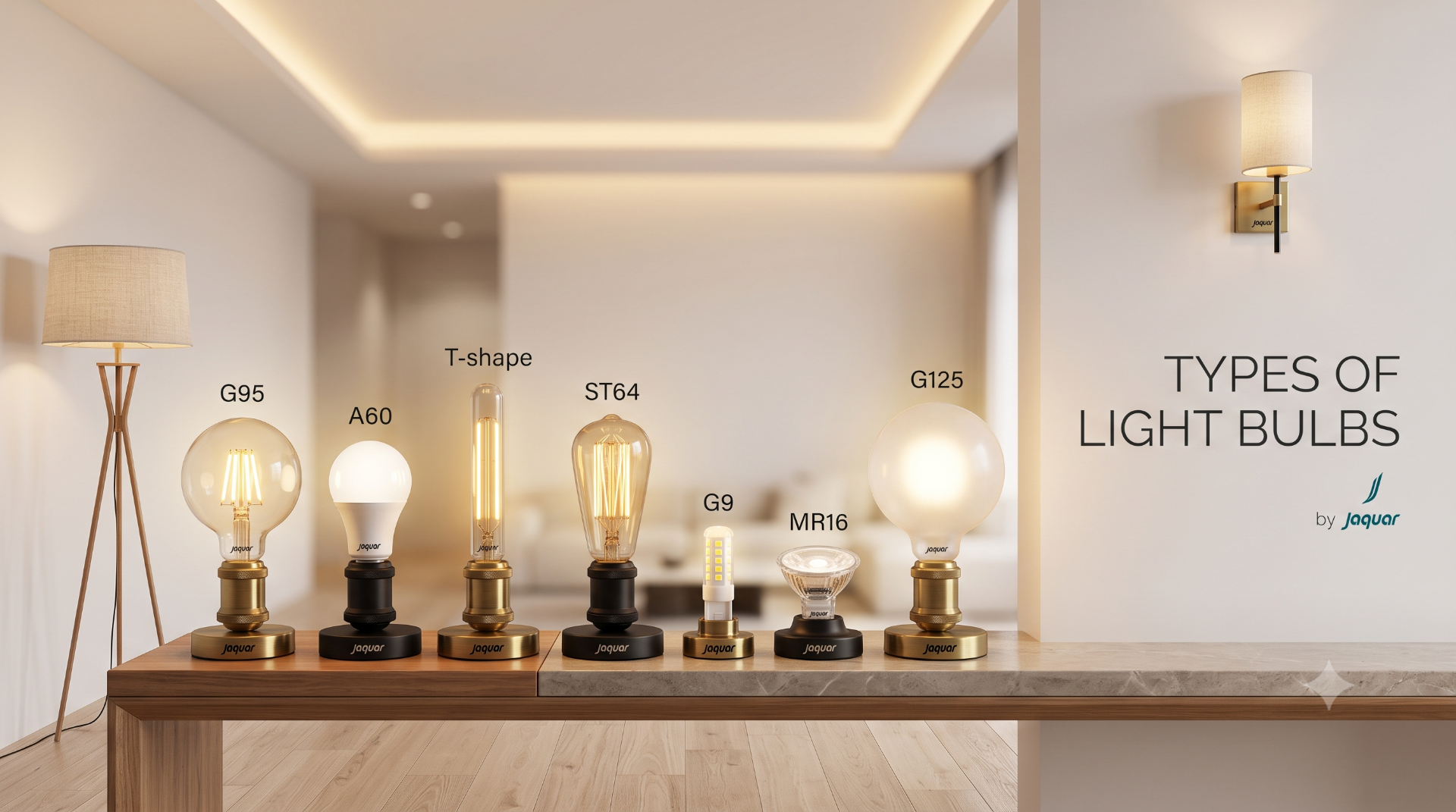
A light bulb may be one of the smallest decisions in a room, but it can influence almost everything about how that room feels. The wrong bulb can make a carefully chosen wall colour appear dull, leave a kitchen worktop poorly illuminated or make a comfortable living room feel unnecessarily stark. The right one can bring out the character of an interior while providing the light needed for everyday activities.
Choosing a bulb, however, involves more than checking its shape or wattage. Brightness, colour temperature, fitting compatibility and the purpose of the room all matter. A bulb suited to a bedside lamp may not be appropriate for a kitchen ceiling fixture, while a decorative filament-style bulb may be selected as much for its appearance as for its illumination.
Understanding the different types of light bulbs makes these decisions easier. This guide explains the bulb options relevant to modern homes, how they differ, where each works best and what to check before choosing a replacement.
What Are the Main Types of Light Bulbs?
Light bulbs can be grouped by the technology they use, their appearance and the role they serve.
For a modern home, the main options to understand are:
- LED bulbs: Energy-efficient bulbs suited to everyday lighting in a range of rooms.
- Filament-style LED bulbs: Bulbs that combine LED technology with the familiar appearance of a visible filament.
- Emergency bulbs: Bulbs designed to provide illumination during a power interruption, subject to the product's operating requirements.
These categories serve different purposes. An LED bulb is a practical choice for regular illumination, a filament-style bulb can complement a decorative fitting, and an emergency bulb can provide an additional layer of preparedness.
Jaquar UAE offers a lighting portfolio that includes LED lighting, decorative lighting and lamp-related products. Before purchasing, check the current local product listing to confirm the specific bulb and fitting available.
1. LED Bulbs: Everyday Lighting for Modern Homes
LED bulbs are widely used because they provide useful illumination while consuming comparatively little electricity. They are suitable for many everyday applications, from general room lighting to lamps used for reading or creating a softer atmosphere.
Unlike older bulb technologies that produce a substantial amount of heat as part of their operation, LEDs convert electricity into light more efficiently. Their operating life and energy use depend on the particular product, installation conditions and how frequently it is used.
Where do LED bulbs work best?
LED bulbs can be used in a variety of residential settings, provided the bulb is compatible with the fixture.
Living rooms: Choose a bulb that supports the room's intended atmosphere. A warmer tone can make the space feel relaxed, while layered lighting can provide additional flexibility.
Bedrooms: Softer, warmer light is often preferred for general evening use. Bedside lamps can provide localised illumination without requiring the entire room to be brightly lit.
Kitchens: Clear, functional illumination is important for food preparation, cleaning and other tasks. The bulb should work with the fixture's distribution and the room's overall lighting plan.
Study areas: Choose a colour temperature and brightness that make reading and focused work comfortable. The position of the lamp matters as much as the bulb.
Corridors and entrances: Consistent illumination helps these areas feel connected to the rest of the home.
What should you check when choosing an LED bulb?
Start with compatibility. The bulb must fit the socket, operate within the fixture's permitted wattage and suit the electrical supply.
Next, consider brightness. Wattage indicates energy consumption, not directly how much light a bulb produces. Lumens are the more useful measure when comparing light output.
Finally, check colour temperature. A bulb may produce warm, neutral or cool-looking light, and this can change the atmosphere of a room considerably.
Jaquar's LED bulb range includes products such as Prima HD and Illuminator LED bulbs. The precise specifications and available variants should be checked on the current UAE product listing before selecting a bulb.
2. Filament-Style LED Bulbs: When the Bulb Is Part of the Design
Some light fixtures are designed to show the bulb rather than conceal it. In these settings, the bulb becomes part of the visual composition.
Filament-style LED bulbs recreate the appearance of traditional visible-filament bulbs while using LED technology. Their appeal lies in the combination of a familiar decorative look and modern lighting performance.
They can work particularly well in:
- Pendant fixtures with exposed bulbs
- Decorative table lamps
- Wall fixtures where the bulb is visible
- Dining areas with open decorative fittings
- Interiors that combine contemporary and traditional details
Are filament bulbs only decorative?
No. They can provide functional illumination as well, but their suitability depends on the bulb's output, the fixture and the room.
A decorative bulb may be appropriate for ambient lighting over a dining area, for example, but may not provide enough focused illumination for detailed work.
If the bulb is visible, its shape, finish and colour also become part of the design. Consider how it looks when switched off, not just how it appears when illuminated.
How to choose a filament-style bulb
Check the fitting first. Decorative fixtures can have specific socket and size requirements, and a bulb that is too large may look awkward or fail to fit.
Then consider the intended role. If the bulb is expected to provide the room's main illumination, confirm that its light output is adequate. If it is primarily decorative, it may be one layer within a larger lighting scheme.
Jaquar's lamp and accessory categories include filament-bulb options in its wider lighting portfolio. Confirm the availability and exact specifications of the relevant product on the UAE website.
3. Emergency Bulbs: Lighting During a Power Interruption
A power interruption can make familiar spaces difficult to navigate, particularly at night. An emergency bulb is designed to provide light when the normal power supply is interrupted, subject to its design and operating conditions.
This makes it a practical consideration for areas where visibility is important, such as:
- Entrances and circulation areas
- Corridors
- Staircase approaches
- Rooms used regularly after dark
- Areas where a sudden loss of lighting would be inconvenient
Jaquar's lighting portfolio includes Kriza Emergency Bulb products. Because emergency operation can vary by model, check the product instructions for charging, operating time, compatible fittings and the conditions under which the emergency function activates.
What should you know before buying one?
Do not assume that every emergency bulb operates in exactly the same way. Some products require a particular switch position or electrical connection to charge and activate correctly.
Read the manufacturer's instructions and confirm that the intended fixture is compatible. Also consider where the bulb will be most useful. An emergency bulb in a room that is rarely used may offer less practical value than one placed in a key circulation area.
Emergency lighting should not be treated as a substitute for a properly designed backup or life-safety system where one is required.
LED Bulbs vs Filament-Style LED Bulbs vs Emergency Bulbs
Type | Main purpose | Where it may work well |
LED bulb | Everyday illumination | Living rooms, bedrooms, kitchens and general-purpose fixtures |
Filament-style LED bulb | Decorative appearance with functional light | Exposed-bulb pendants, decorative lamps and visible fixtures |
Emergency bulb | Light during a power interruption | Selected rooms and circulation areas where backup illumination is useful |
These categories are not always mutually exclusive. A filament-style bulb can use LED technology, while an emergency bulb may also use LED technology. The important distinction is the feature you need: everyday efficiency, decorative appearance or emergency operation.
4. Understand Brightness Before Choosing a Bulb
One of the most common bulb-buying mistakes is comparing products by wattage alone.
Wattage tells you how much electrical power a bulb uses. It does not tell you directly how bright it will appear. Lumens measure the amount of visible light produced and are therefore more useful when comparing brightness.
For example, two bulbs with different wattages may provide similar light output. The more efficient bulb can produce comparable illumination while using less electricity.
However, brightness is not determined by lumens alone. The fixture, shade, reflector and direction of the light all affect how much illumination reaches the surface where it is needed.
A bulb inside an opaque shade will distribute light differently from one in an open fitting. A ceiling bulb may illuminate a room broadly, while a table lamp directs light into a more localised area.
Practical tip: When replacing a bulb, compare its lumen output with the existing bulb rather than choosing a replacement based only on wattage.
5. Choose the Right Colour Temperature
Colour temperature describes whether a light appears warm, neutral or cool. It is measured in kelvin (K).
- Warm white: Creates a softer, more relaxed appearance.
- Neutral white: Offers a balanced, relatively natural-looking tone.
- Cool white: Produces a crisper, more alert visual character.
The best option depends on the room, the materials around it and the activities performed there.
Warm white for relaxed spaces
Warm white is often suitable for bedrooms, living rooms and dining areas where a comfortable atmosphere is important. It can complement wood, warm neutrals and earthy finishes.
Neutral white for everyday tasks
Neutral white can work well in kitchens, study areas and other spaces where a balanced appearance is useful. It can help maintain clarity without creating an especially warm or cool atmosphere.
Cool white for functional areas
Cool white can suit utility areas and workspaces where a crisp visual appearance is preferred. Whether it is appropriate depends on the room's existing lighting and the user's comfort.
There is no universal rule that one colour temperature is best for every room. A consistent approach across connected spaces usually produces a more cohesive result.
6. Select Bulbs Room by Room
Living room
The living room usually serves several purposes: conversation, entertainment, reading and relaxation. A single bulb may not meet all these needs.
Use the main fixture for general illumination and consider table, floor or wall lighting where additional flexibility is needed. If the bulb is visible, its appearance should complement the fitting and the room's decorative style.
Bedroom
A bedroom generally benefits from comfortable, controlled lighting. A warmer colour temperature can support a relaxed atmosphere, while bedside lamps provide light for reading without illuminating the entire room.
Check whether a bulb is compatible with a dimmer before assuming its brightness can be adjusted.
Kitchen
Kitchen lighting should support practical tasks. Consider how the light reaches worktops, storage areas and preparation surfaces.
A bulb that is bright enough in an open ceiling fixture may not provide the same useful illumination when installed behind a deep shade.
Bathroom
Bathroom lighting needs to support grooming and everyday routines. The suitability of a bulb depends on the fixture, its location and the bathroom's electrical requirements.
Always use a fixture and bulb combination appropriate for the installation environment. Do not assume a standard indoor bulb is suitable for every bathroom location.
Study or home office
A desk lamp can provide localised illumination for reading and computer-based work. Position the light to reduce reflections on screens and avoid casting shadows across the work surface.
The bulb should provide enough light for the task without creating uncomfortable glare.
Corridors and entrances
These areas benefit from consistent illumination and a clear visual connection with adjacent rooms. Emergency bulbs may also be worth considering in selected locations, depending on the product's intended use.
7. Check the Bulb Base and Fixture Compatibility
A bulb can have the right brightness and colour temperature and still be unsuitable for the fixture.
Before buying a replacement, check:
- Base or cap type: It must match the socket.
- Bulb dimensions: The bulb must fit inside the shade or enclosure.
- Permitted wattage: Do not exceed the fixture's rating.
- Electrical compatibility: Confirm that the bulb suits the supply and fixture.
- Dimming compatibility: Both the bulb and dimmer must support the intended operation.
- Environmental suitability: Check whether the fixture is appropriate for damp, enclosed or outdoor locations.
Never force a bulb into a socket or modify a fixture to accommodate an incompatible product. If the fitting or wiring is uncertain, consult a qualified electrician.
8. Think About the Fixture, Not Just the Bulb
A bulb does not work in isolation. The fixture determines how the light is distributed and how the bulb appears within the room.
A ceiling fixture may spread light across a broad area. A pendant can create a more focused pool of light. A table lamp may illuminate a reading area, while a decorative wall lamp can contribute to the atmosphere of a corridor or living room.
Jaquar's UAE lighting portfolio includes indoor, decorative, outdoor and lamp-related categories. Coordinating the bulb with the fixture helps ensure that both the appearance and the light output suit the space.
9. Common Bulb-Buying Mistakes
Choosing by wattage alone: Compare lumen output for brightness and wattage for energy consumption.
Ignoring colour temperature: A bulb can provide sufficient light yet still create the wrong atmosphere.
Overlooking the socket: Always verify the base type and dimensions.
Assuming every LED bulb is dimmable: Check the product specifications and dimmer compatibility.
Using a decorative bulb as the only task light: Its appearance may be appealing, but the output may not meet the task's needs.
Ignoring emergency-bulb instructions: Charging and activation requirements vary by product.
Replacing a bulb without checking the fixture: Enclosed, damp or outdoor settings may require specific compatibility.
10. A Simple Checklist Before You Buy
Ask these questions before selecting a bulb:
- What is the purpose of the light: general, task, decorative or emergency?
- How much brightness is required?
- Which colour temperature suits the room?
- Does the base match the socket?
- Will the bulb fit inside the fixture?
- Is dimming required, and is the bulb compatible?
- Is the bulb suitable for the installation environment?
- Have the product specifications and instructions been checked?
This short review can prevent common compatibility problems and help you select a bulb that works as intended.
Frequently Asked Questions
1. What are the main types of light bulbs for homes?
Common options include LED bulbs, filament-style LED bulbs and emergency bulbs. They serve different needs, from everyday illumination to decorative applications and backup light during power interruptions.
2. Are LED bulbs suitable for everyday home use?
Yes. LED bulbs are suitable for many everyday applications because they can provide useful illumination with relatively low energy consumption. Choose a bulb that matches the fixture, brightness requirement and colour temperature.
3. What is the difference between an LED bulb and a filament LED bulb?
Both can use LED technology. A filament-style LED bulb is designed to recreate the appearance of a traditional visible-filament bulb, making it useful in fixtures where the bulb itself is part of the décor.
4. What is an emergency bulb used for?
An emergency bulb is designed to provide illumination during a power interruption, subject to the product's operating conditions. Check its instructions for charging, activation and compatibility.
5. How do I choose the right brightness for a room?
Consider the room's size, purpose, fixture and existing lighting. Compare lumen output rather than relying on wattage alone, and remember that the fixture affects how light reaches the room.
Conclusion
Choosing a light bulb becomes easier when you start with the job it needs to do. LED bulbs provide everyday illumination, filament-style LED bulbs combine functional light with a decorative appearance, and emergency bulbs offer an additional option for selected situations where backup illumination is useful.
From there, check brightness, colour temperature, socket compatibility and the fixture's requirements. These practical details have a greater impact on the final result than choosing a bulb based on appearance alone.
Jaquar's lighting portfolio brings together LED bulbs, decorative lighting and related lighting products for different applications. A coordinated selection can help maintain a consistent approach to illumination across rooms while allowing each space to serve its own purpose.
For UAE homes, the most useful lighting choice is one that balances comfort, functionality and compatibility with the existing fixture.