

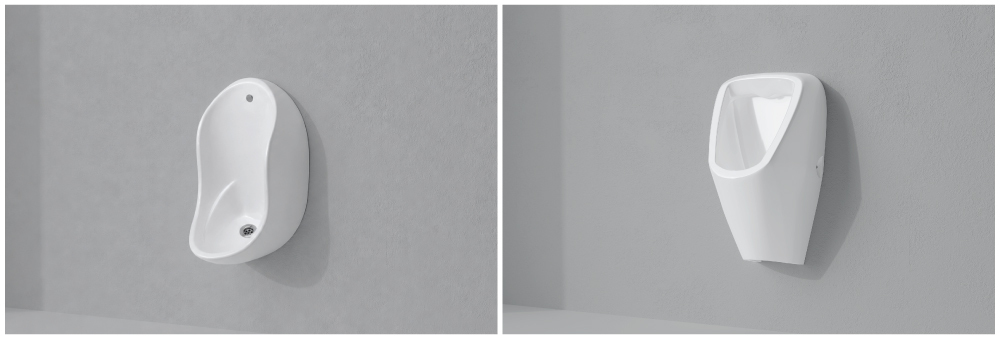
Walk into any well-designed washroom and chances are, someone thought carefully about the urinal. The type, the size, the flush system, these decisions affect how a space looks, how it functions, and how easy it is to keep clean. If you are a homeowner, a facility manager, or an interior designer trying to get this right, here is a straightforward guide to help you.
What Is a Urinal?
A urinal is a wall or floor fixture used only for urination. That is the simple answer. When people ask about urinal vs toilet, the difference comes down to one thing. A toilet deals with both liquid and solid waste, while a urinal handles liquid only. That is why it uses less water, takes up less space, and tends to be much quicker to clean.
You might also wonder why was the urinal invented in the first place. It came down to practicality. In the 19th century, as cities grew rapidly and public spaces became busier, there was a clear need for a faster, more sanitary option for male users in high-traffic locations. The design has evolved significantly since then, but the core idea has stayed the same.
Urinals have been a standard fixture in commercial washrooms for well over a century. These days, they are also finding their way into residential bathrooms, particularly in homes where practicality matters.
Types of Urinals Explained
There are more different types of urinals than most people realise. Each one suits a different setting, user need, and level of daily use. Here is a breakdown of the main urinal types available.
1. Wall-Hung Urinals
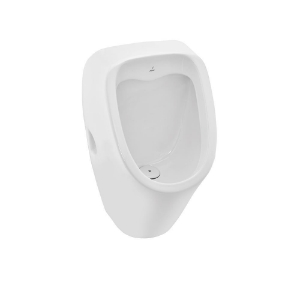
This is the most widely used type. The unit attaches directly to the wall, leaving the floor completely clear underneath. That makes mopping and cleaning far less of a hassle. Wall-hung urinals come in many styles, from simple and functional to slim, modern urinals design options that look at home in a well-finished bathroom.
2. Floor-Standing Urinals
These sit on the floor rather than fixing to the wall. They tend to appear in older buildings or in settings where wall-mounting is not possible. They are sturdier in some respects but take up more floor space and can be harder to clean around the base.
3. Waterless Urinals
No water, no flush. Waterless urinals use a cartridge or liquid seal to block odours while letting liquid waste drain through. For facilities with high footfall, the water savings over a year are considerable. They do require cartridge changes, but running costs tend to stay low.
4. Trough Urinals
Long, channel-shaped, and built for volume. Trough urinals are found in stadiums, large event venues, and public facilities where queues form quickly. They serve multiple users at once and are purely a commercial solution, not something you would find in a home or boutique hotel.
5. Stall Urinals
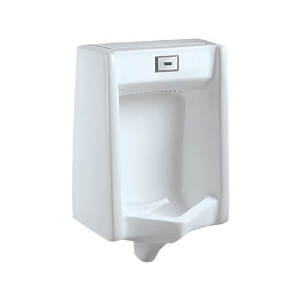
These include side partitions for privacy. They work well in offices, hotels, and airports where people expect a bit more discretion. They use more wall space than a standard wall-hung unit, but the added privacy makes a real difference in certain settings.
6. Rimless Urinals
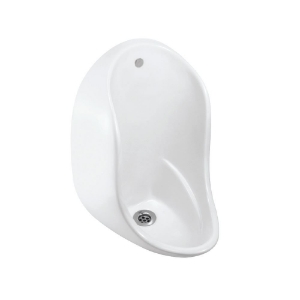
Rather than a traditional inner rim, these rimless urinals have an open design that lets water spread evenly across the whole surface with each flush. No rim means no hidden corners where bacteria and limescale can build up. They are noticeably easier to keep clean and are a practical choice for anyone who wants low maintenance over the long term.
Also Read: Essential Bathroom Accessories to Enhance Modern Bathrooms
How to Choose the Right Urinal Size?
Urinal sizes are one of the most overlooked parts of the buying process, and getting it wrong causes more problems than most people expect.
A. For adult users, the rim of the urinal should sit between 60 and 65 cm from the floor. This is the accepted standard across commercial washrooms. For children, such as in a school or family facility, that drops to around 43 cm.
B. In terms of width, most wall-hung urinals need at least 35 to 40 cm of wall space. If you are installing more than one, allow a minimum of 70 cm between the centre of each unit. Less than that and the space will feel cramped.
C. For home bathrooms, go for compact urinals for home. A slim wall-hung urinal fits neatly into a corner or along a short wall without dominating the room. For commercial spaces with heavy daily use, think about multiple units or a trough design, depending on the layout.
Before anything gets fixed to a wall, check where your existing plumbing runs. This will determine what is practical and what is not.
Urinal Flush Systems Comparison
| Manual Flush Valves | Sensor/Automatic Flush | Timed auto-flush | Waterless Flush Systems |
| Manual flush valves are operated by hand. | No manual touching required, which keeps things hygienic, and the flush volume stays consistent. | Timed auto-flush runs on a set schedule regardless of whether the urinal has been used. | Waterless flush systems need no flush at all. |
| Simple, dependable, and used in commercial washrooms everywhere. | A good choice for busy public washrooms. | Works well in high-traffic settings but can waste water in quieter ones. | Zero water consumption, regular cartridge changes, and a good long-term option where water efficiency is a priority. |
- Manual flush valves are operated by hand. Simple, dependable, and used in commercial washrooms everywhere.
- Sensor or automatic flush triggers once the user steps away. No touching required, which keeps things hygienic, and the flush volume stays consistent. A good choice for busy public washrooms.
- Timed auto-flush runs on a set schedule regardless of whether the urinal has been used. Works well in high-traffic settings but can waste water in quieter ones.
- Waterless systems need no flush at all. Zero water consumption, regular cartridge changes, and a good long-term option where water efficiency is a priority.
On water usage, standard urinals use 1 to 3 litres per flush. Water-saving models bring that down to as little as 0.5 litres per flush.
Also Read: Advantages Of Installing Sensor Urinal In Restroom
Top Urinal Design Tips for Modern Bathrooms
Good urinals design is about more than just picking a shape. Keep the floor clear by going wall-hung wherever possible. It makes the room feel bigger and simplifies cleaning. Match your urinal finish to the rest of your fixtures, as a consistent finish ties a washroom together properly. If hygiene is a concern, go rimless. The difference in how easy they are to clean is immediately noticeable. And if you are installing a urinal in a home bathroom, a simple urinal privacy screen goes a long way.
FAQs:
Q1: What is the standard height for a urinal?
A. For adult users, the rim should sit between 60 and 65 cm from the floor. This is the standard followed across most commercial washrooms. For children, such as in schools or family facilities, the recommended height drops to around 43 cm.
Q2: What are the different types of urinals?
A. The main types are wall-hung, floor-standing, waterless, trough, stall, and rimless. Wall-hung is the most common for both home and commercial use. Each type suits a different setting. Trough urinals handle high-volume public spaces, while rimless models are a popular choice where hygiene and easy cleaning are the priority.
Q3: How much water does a urinal use per flush?
A. Standard urinals use anywhere between 1 and 3 litres per flush. Water-saving models bring that figure down to as little as 0.5 litres. Over the course of a year in a busy washroom, that difference adds up to a significant reduction in water consumption and running costs.
Q4: Can urinals be installed in home bathrooms?
A. Yes, and it is becoming more common. Compact wall-hung urinals fit neatly into a residential bathroom without taking up much space. They are a practical option for households with multiple male users and can actually reduce the overall cleaning load on the main toilet.
Q5: What is the difference between a urinal and a toilet?
A. A urinal is designed solely for liquid waste, while a toilet seat handles both liquid and solid waste. Because of this, urinals are smaller, use considerably less water per flush, and are generally quicker and easier to clean. In high-traffic settings, having urinals alongside toilets also helps manage the flow of people more efficiently.
#Tags:
urinal standard height, types of urinals, urinal types, urinal size, urinal area dimensions, urinal height from floor, urinal bowl installation height, urinal bowl standard height
Explore Our Bathroom Categories: