


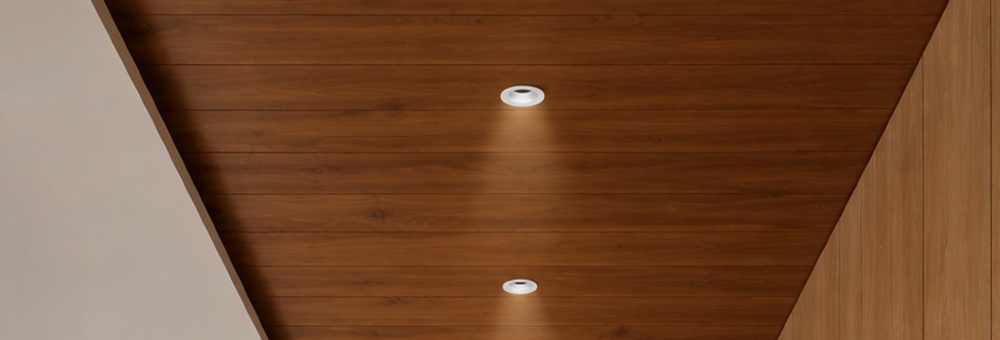
Lighting can change the feel of a room without changing anything else in it. Sometimes, the difference comes down to where the light falls, how widely it spreads and whether it is too harsh for the space. Downlights are often used to achieve this kind of lighting, particularly in interiors where a clean ceiling finish is preferred.
But choosing them is not as simple as buying a set of fittings and placing them at equal distances. The ceiling, room layout and purpose of the lighting all need a little thought.
Table of Contents
- What Are Downlights?
- Different Types of Downlights
- Recessed Downlights
- Surface-Mounted Downlights
- Adjustable Downlights and Spotlights
- Choosing the Right Downlight Wattage
- How Far Apart Should Downlights Be?
- Are LED Downlights Energy Efficient?
- Before You Buy: A Few Details Worth Checking
- Frequently Asked Questions
What Are Downlights?
Downlights are ceiling fittings that direct light downwards. Some are fitted into the ceiling, while others sit on its surface.
Jaquar offers both types, with different designs and technical specifications across its lighting range. They can be used in homes, offices and other interiors, depending on the product selected.
Before looking at wattage or appearance, consider the room itself. A kitchen, for instance, has different lighting requirements from a bedroom. The same fitting may not be suitable for both.
Different Types of Downlights
Recessed Downlights
A recessed downlight sits inside the ceiling, leaving only the visible part of the fitting exposed. This is one reason it is often chosen for modern interiors where a less noticeable lighting arrangement is preferred.
Jaquar's range includes recessed downlights in different sizes and specifications. Some models direct light straight down, while adjustable versions allow the beam to be angled.
There is one practical detail to sort out early: the space above the ceiling. A recessed fitting needs room for installation, so check its dimensions before finalising the false ceiling.
Surface-Mounted Downlights
These fittings sit on the ceiling rather than inside it. They can be useful when there is not enough room above the ceiling for a recessed light, or when cutting into the ceiling is not part of the plan.
Jaquar also offers surface-mounted lighting options. Their dimensions and appearance vary, so look at the fitting in relation to the ceiling height and the rest of the room.
Adjustable Downlights and Spotlights
Sometimes, general room lighting is not enough. You may want to draw attention to a textured wall, a painting or a particular architectural feature.
An adjustable downlight can direct its beam towards a chosen area, depending on the model. A spotlight is another option for more focused illumination.
These fittings do a different job from lights intended to illuminate the room more broadly. Combining them can help create a more considered lighting scheme, provided each fitting has a clear purpose.
Choosing the Right Downlight Wattage
It is tempting to assume that a higher wattage means a better light. That is not necessarily the case.
Downlight wattage tells you how much electrical power a fitting uses. Lumens indicate how much light it produces. When comparing two products, both figures are useful, particularly if their designs and beam angles differ.
Jaquar offers downlights in different wattages and light outputs, depending on the model. Rather than settling on a number straight away, think about what the light needs to do.
A fitting used for general illumination has a different purpose from one intended to highlight a small feature. The spread of light matters, too. A narrow beam concentrates illumination over a smaller area, while a wider beam distributes it more broadly.
Colour temperature is another detail worth considering. Jaquar offers warm, neutral and cool options across selected lighting products. Which one suits your room depends on the atmosphere and appearance you want.
How Far Apart Should Downlights Be?
There is no fixed distance that works for every ceiling. Downlight spacing depends on the height of the ceiling, the beam angle, the light output and the arrangement of the room.
Imagine placing lights in a living room without considering the furniture. You might end up with a fitting directly above a sofa where it creates unwanted glare, while another part of the room remains poorly lit. A little planning beforehand can prevent this.
Start with the areas that need illumination. In a kitchen, the worktop may need particular attention. In a corridor, the light needs to extend along the route. In a living room, the seating arrangement and other features can influence where the fittings should go.
Then look at the specifications of the chosen product. Jaquar provides details such as beam angle and lumen output for its listed models, which can help inform the layout.
If you are planning a false ceiling, decide on the positions before the openings are cut. Changing them afterwards can be more complicated than adjusting the plan at the beginning.
Are LED Downlights Energy Efficient?
An LED downlight can be a practical option for general and focused lighting. Jaquar's range includes LED downlights in different wattages and light outputs.
However, energy use is not determined by wattage alone. The number of fittings installed and the length of time they remain switched on also affect overall consumption.
For example, choosing a lower-wattage fitting may not reduce total energy use if you need many more fittings to achieve the required illumination. Compare the power consumption with the light output before making a decision.
It is also worth thinking about how the room is used. Lighting in a frequently occupied office or commercial space may be switched on for much longer than lighting in a bedroom.
Before You Buy: A Few Details Worth Checking
Once you have shortlisted a few fittings, take a closer look at the practical details.
- Ceiling type: Will the fitting work with the available installation space?
- Light output: Does it provide enough illumination for the intended area?
- Beam angle: Will the light spread across the room or focus on one spot?
- Colour temperature: Does it suit the room and the other lights?
- Bathroom installation: If you plan to use the fitting in a bathroom, check its IP rating and suitability for that location.
- Dimming: If adjustable brightness matters to you, confirm that the particular model supports it.
Jaquar's product listings provide technical information for individual fittings, including dimensions, wattage and beam angle, with other specifications available depending on the model. These details are worth checking before you commit to a particular light.
Frequently Asked Questions (FAQs)
1. What are downlights?
Downlights are ceiling fittings that direct light downwards. They may sit within the ceiling or be mounted on its surface.
2. What are the different types of downlights?
Common options include recessed, surface-mounted and adjustable downlights. Spotlights can also be used when more focused illumination is needed.
3. What wattage downlights do I need?
That depends on the room and the amount of light required. Compare wattage with lumen output and beam angle rather than choosing a fitting on wattage alone.
4. How far apart should downlights be placed?
Spacing depends on the ceiling height, beam angle, light output and room layout. The positions should be planned around the areas that need illumination and the specifications of the selected fitting.
5. Are LED downlights energy efficient?
LED downlights can provide illumination with relatively low power consumption. The overall energy used will depend on the wattage, number of fittings and how long they are switched on.