




We use cookies to deliver the best possible experience on our website. By continuing to use this site, or closing this box, you consent to our use of cookies.

Shower Enclosures
Shower Glass Partition - Shower Cubicles
- 01
Features
- Readily available in standard sizes
- Separates dry and wet areas and optimises bath spaces
- Easy Clean (Anti Limescale Treatment)
- Brass Hardware
- Made of toughened safety glass and high-quality hinges
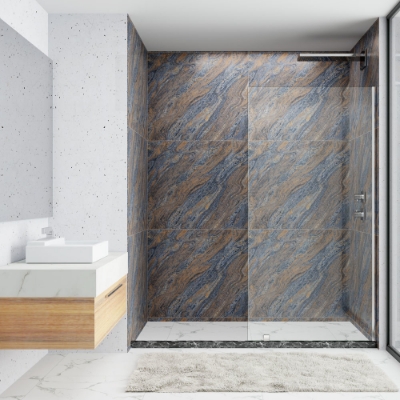
- Choose from Frameless shower enclosures, Semi-framed and Framed shower enclosures
- One-stop solution (Design – Installation – Maintenance)
- Available at leading sanitaryware stores
- 5 Years Warranty on Hardware
- 02
Quality checks
- Fragmentation test: to check breakage pattern of glass
- Zebra test: no waviness
- Ball drop test (impact resistance): to check strength at point of impact
- Visual defects: to check bubbles, scratches, chipping at edges and other visible defects
- Free fall test: to check overall strength of glass, by throwing the glass freely on a plain surface
- 03
Glass
Tempered glass: Option of 6 mm, 8 mm and 10 mm. Advantages of tempering/toughening glass:
- 4-5 times stronger then normal float glass
- Breaks into small pieces/dices minimising risk of injury
- Can resist thermal stress as edge strength is higher
Tempering done at Jaquar's own fully automatic state of the art tempering unit
- Tempering for shower enclosure glasses only
- 90% of an enclosure is glass, so glass must conform to the highest safety standards as it is used in the bathroom
- 04
Hardware
Frameless Range
- Hinges
- Minimalist and sleek design to make entire enclosure look aesthetically appealing
- Made of brass with nickel and chrome plating
- Automatic closing up to 300
- Tested for 5 lakh cycles
- Rust proof screws
- Screw caps
- Protective film on the hardware to prevent scratches etc.
- Designed to carry loads of up to 25 kg (per hinge)
- Gasket
- Food grade plastic
- Hinges
- 05
Standards
- These standards ensure that the glass passes stringent quality parameters
- Ensures consistency
- Enhances life of the product conforms to both European and Indian standards
- 06
Reference: India
- IS 2553 (part 1: 1990)
- IS 14900: 2000
- IS 2835: 1987
- 07
Towel Bars
- Longest towel rod (405 mmx205 mm) to hang 2 towels
- Brass with nickel and chrome finish
- 19 mm dia.
- No visible screws
- 08
Glass Connectors
- Minimalist and sleek design to match the hinges
- Made of brass with nickel and chrome plating
- 09
Stabilisers
- SS 304 grade
- Mirror finish to match chrome finish of the hinges and connectors
- 19 mm dia.
- 10
Reference: Europe
- En 14450: 2000
- Adheres to European toughening norms
- 11
Sliding Range
- Top hung channel - gives free walk way
- Wall profiles: sleek with 15 mm adjustment
- Rollers: ball bearing encapsulated in brass
- 5-year warranty on rollers
- 12
Plastic Parts
Semi-Framed and Frameless Range:
- Made of food grade plastic
- Finish
- Sleek to match with hardware
- Transparent look complementing glass
- Enhances aesthetic appeal of enclosure
- Concealed magnet ensuring longer life
- 5-year warranty for complete peace of mind
- 13
Hinges
Rise and fall mechanism: door rises 6 - 8 mm above the floor while opening thus preventing any chance of breakage
- 14
Profiles instead of wall connectors
- Aluminium profiles with powder coating
- Aluminium is first cut to size, then chemically treated and then powder coated so that there is no chance of rusting
- Adjustment of 15 mm so as to cover undulations in the wall
A well-planned shower enclosure brings together the practical requirements of everyday bathing and the design of the wider bathroom. Beyond the glass panels and door, the finished installation depends on accurate measurements, suitable drainage, compatible shower fittings, effective water containment and access for cleaning and maintenance. Considering these elements together helps create a showering area that works well within the available space.
Whether you are designing a new bathroom, updating an existing shower or planning a larger renovation, the most effective approach is to consider the enclosure as part of the complete bathroom layout. The position of the shower, the direction of the door opening, the location of the water outlets and the relationship between wet and dry areas can all influence the final result.
This guide explores the planning decisions that can help homeowners, designers and installers choose and coordinate a shower enclosure with greater confidence.
Start with the Complete Bathroom Layout
Before choosing an enclosure, assess how the showering area will fit into the room. The available floor area is only one consideration. The position of the entrance, nearby sanitaryware, storage, windows and other fittings can affect how comfortably the shower can be used.
Begin by identifying the proposed shower location and measuring the surrounding space. Consider the distance between the enclosure and nearby fixtures, the route into the shower and the space required to open its door. The objective is to create a layout that feels organised without restricting movement around the bathroom.
Consider movement and access
A shower enclosure should provide a practical entrance and allow users to move comfortably within the available space. Door movement is especially important in compact bathrooms, where a door that opens into the room may interfere with a basin, toilet or other fitting.
When reviewing the layout, consider both the closed and fully open positions of the door. Sliding doors, hinged doors and other opening arrangements create different spatial requirements. Confirm the clear opening and installation dimensions of the selected product rather than relying on the overall enclosure measurement alone.
For shared bathrooms, also consider how the shower entrance relates to the rest of the room during everyday routines. A well-planned layout can help reduce unnecessary obstructions and make the space easier to use.
Plan for the people using the bathroom
Bathroom layouts can serve different household needs, from a compact private bathroom to a shared family space or a guest bathroom. The enclosure should be selected according to the intended users, the available room and any relevant accessibility requirements.
Where easier access is a priority, assess the entrance width, threshold arrangement, door operation and space available for movement. Specific accessibility needs should be discussed with a qualified designer or installer, taking account of applicable local requirements and the selected products.
Measure the Installation Area Accurately
Accurate measurements are essential when selecting a shower enclosure. Even a small difference between the planned opening and the actual site dimensions can affect how the enclosure fits and operates.
Measurements should be taken at the installation location, with the intended floor and wall finishes taken into account. If the bathroom is being renovated, measurements from the existing room may need to be checked again after tiles, wall panels or other finishes are removed or installed.
Measure at more than one point
Walls and floors are not always perfectly level or square. In some spaces, the distance between opposing walls can vary from one point to another. Measuring the opening at multiple points helps identify these variations before the enclosure is ordered.
The installer should assess the walls, floor levels and corners against the installation requirements of the selected product. Do not assume that every enclosure can accommodate the same degree of variation.
Account for finished surfaces
The finished dimensions may differ from the dimensions of the underlying structure. Tiles, wall panels and other finishes can affect the available opening and the position of fixing points.
For this reason, coordinate measurements with the construction schedule. If the enclosure will be installed after tiling, confirm how the final measurements will be established and which dimensions the manufacturer requires.
Check the exact product dimensions
An enclosure described by its nominal width or size may have specific installation dimensions, adjustment limits and clearance requirements. These should be verified using the relevant product documentation.
Before placing an order, confirm the overall dimensions, installation opening, door clearance and any specified wall adjustment. If the measurements are uncertain, ask the installer or authorised product supplier to verify them.
Coordinate the Enclosure with the Shower System
The enclosure and shower system should be planned together. The position of the shower head, water outlets and controls can affect the usability of the space and the way water is contained within it.
Explore the available showers when planning the showering area. The selected shower system should be suitable for the intended installation and coordinated with the enclosure dimensions.
Position the shower head thoughtfully
The shower head should be positioned in relation to the showering area, the enclosure opening and the surrounding surfaces. Consider where the water will fall during normal use and whether the arrangement could direct excessive spray towards a door opening or an area outside the enclosure.
The appropriate position depends on the shower head, water delivery arrangement and bathroom layout. Follow the installation instructions for the selected products and consult the installer when deciding on the final placement.
Plan the controls for convenient use
Shower controls should be positioned so that the shower can be operated comfortably and the selected installation requirements can be met. Their location should also be considered alongside the enclosure door and entrance.
Where the layout allows, planning the controls in relation to the entrance can help users operate the shower without needing to reach awkwardly into the showering area. The precise arrangement will depend on the bathroom design and the product specifications.
Consider handheld shower components
A handheld shower can complement an overhead shower by providing an alternative way to direct water. If the installation includes a handset, hose and holder, check where these components will sit relative to the enclosure and other fittings.
The shower accessories category can help you explore related components for a coordinated installation. Confirm the compatibility of the chosen accessories with the intended shower system before ordering.
Understand the Relationship Between Water Containment and Drainage
A shower enclosure helps define the showering area, but the complete installation also needs to manage water effectively. Its performance depends on the relationship between the enclosure, the floor or shower tray, the drainage arrangement and the surrounding surfaces.
The design should account for how water reaches the drain and how the shower area connects to the rest of the bathroom floor. A suitable arrangement depends on the selected tray or floor construction, the enclosure design and the site's plumbing and waterproofing requirements.
Plan the shower tray or floor arrangement
A shower enclosure may be installed over a compatible shower tray or as part of a suitably designed floor-level shower area. The right arrangement depends on the intended design, the products selected and the construction of the bathroom.
Before choosing the enclosure, establish the dimensions and position of the tray or showering area. Confirm that the enclosure is suitable for the intended configuration and that the door, panels and seals can be installed as specified.
For floor-level installations, the floor construction, drainage and waterproofing require particular attention. These elements should be planned by appropriately qualified professionals before the finished surfaces are installed.
Check the junctions between surfaces
The areas where glass, profiles, walls and the shower tray or floor meet are important parts of the installation. The enclosure must be fitted and sealed according to the manufacturer's instructions, with compatible materials used where specified.
Do not assume that applying additional sealant can correct an incorrectly fitted enclosure or an unsuitable floor arrangement. If water escapes from the showering area, identify the cause rather than treating the visible symptom alone.
Consider the wider bathroom floor
Water that reaches the bathroom floor can affect usability and cleaning. The shower layout should therefore be assessed in relation to the entrance, adjacent fixtures and the route through the room.
Appropriate drainage, waterproofing and installation practices are essential. Their specification should follow the requirements of the selected system and the applicable local building and plumbing regulations.
Choose Glass and Hardware with the Installation in Mind
The appearance of a shower enclosure is shaped by its glass panels, door arrangement, profiles, hinges, handles and other hardware. These components should be considered together, both for visual consistency and for compatibility.
Jaquar's published international enclosure information includes framed and frameless options, different glass specifications and associated hardware. The exact configurations, dimensions and available finishes should be confirmed on the relevant country website and product documentation.
Check the specified glass
Glass selection should be based on the specification of the exact enclosure, including the stated glass type, thickness and applicable safety requirements. Do not assume that glass from one enclosure can be substituted for another simply because the dimensions appear similar.
Confirm that the complete enclosure is intended for the proposed application and that the glass and hardware meet the relevant local requirements. Where product certification or conformity documentation is required, consult the supplier or manufacturer.
Consider the hardware arrangement
Hinges, sliding mechanisms, profiles, connectors and other fittings influence how an enclosure is assembled and operated. Their compatibility with the selected glass and enclosure design is essential.
For hinged doors, consider the direction of opening and the clearance required. For sliding doors, consider the available space along the enclosure and the access provided by the opening. The specific mechanism and its installation requirements should guide the final choice.
Coordinate visible finishes
Hardware finishes can contribute to the overall appearance of the bathroom. A consistent finish across the enclosure hardware, shower fittings and other visible components can create a unified look, while a contrasting finish can be used as a deliberate design detail.
When selecting finishes, check the actual product options available in your market. Finish names, availability and appearance can vary between ranges and country websites, so visual similarity alone should not be treated as proof of an exact match.
Make Cleaning and Maintenance Part of the Design
A shower enclosure is used frequently and is exposed to water, soap residues and other bathroom deposits. Its long-term appearance depends partly on the materials, installation quality, care routine and local water conditions.
Jaquar's published enclosure information includes easy-clean glass treatment on specified products. As availability and product specifications can vary, confirm whether this feature applies to the particular enclosure being considered.
Establish a suitable cleaning routine
Follow the manufacturer's care instructions for the glass, profiles, hinges, seals and other components. Use cleaning products and materials that are suitable for the specified finishes.
Regular removal of water deposits and soap residue can help keep the enclosure presentable. Avoid assuming that all glass treatments or hardware finishes can be cleaned in the same way. Abrasive materials or unsuitable chemicals may damage some surfaces.
Inspect moving components
Doors, hinges, rollers, handles and seals are subject to repeated use. Periodically check for visible damage, unusual movement or signs that a component is not operating as intended.
If a door becomes difficult to move or no longer closes correctly, do not force it. Have the installation assessed and follow the product's maintenance instructions. Replacement parts should be compatible with the specific enclosure.
Consider long-term access to components
The layout should allow the enclosure to be cleaned and its accessible components inspected. Where the shower is fitted into a tight corner or against other fixtures, consider whether the glass surfaces and hardware can be reached without difficulty.
Planning for routine care at the design stage can help avoid an arrangement that looks appealing but is awkward to maintain.
Integrate the Enclosure with Other Bathroom Fixtures
A shower enclosure should work as part of the overall bathroom scheme rather than as a separate feature. Its position, dimensions and visual design influence how the room feels and how easily its other fixtures can be used.
Consider the relationship between the enclosure and the taps, basin and vanity. Check that the shower door does not interfere with nearby fittings and that the enclosure does not unnecessarily restrict access to storage or other parts of the bathroom.
In a family bathroom, the position of the toilet may also influence the shower entrance and available circulation space. Measuring the complete room helps identify potential conflicts before installation begins.
For a more coordinated design, consider the proportions of the glass panels, the profiles and the finishes of the other fittings. The aim is to create a consistent overall appearance while ensuring that each component performs its intended function.
Plan for Renovations and Replacement Projects
Replacing an existing shower enclosure may involve more than changing the glass and door. The condition of the existing walls, floor, tray, waterproofing and plumbing can affect whether a new enclosure can be installed in the same position.
Begin by identifying the existing enclosure type and measuring the opening. Check the condition of the surrounding surfaces and establish whether the proposed replacement is compatible with the existing tray or floor arrangement.
If the new enclosure has a different door mechanism, profile arrangement or installation requirement, additional adjustments may be necessary. Confirm these requirements before removing the existing enclosure.
Where leaks, damaged tiles, loose fittings or signs of moisture are present, assess the underlying cause before installing the replacement. A new enclosure should not be used to conceal an unresolved problem with the surrounding construction.
For a major renovation, coordinate the enclosure specification with the plumbing, waterproofing, tiling and flooring work. This makes it easier to establish the correct installation sequence and reduce the risk of rework.
A Practical Checklist Before Ordering
Before finalising a shower enclosure, review the following points with the designer, installer or product supplier:
- Room measurements: Have the installation opening and surrounding clearances been checked?
- Finished dimensions: Do the measurements account for the planned wall and floor finishes?
- Door operation: Is there sufficient clearance for the selected opening arrangement?
- Shower compatibility: Are the shower head, controls and associated fittings appropriate for the layout?
- Water management: Have the shower tray or floor, drainage and waterproofing requirements been addressed?
- Product specification: Have the glass, hardware, dimensions and installation requirements been confirmed?
- Maintenance: Can the enclosure be cleaned and its components inspected appropriately?
- Local requirements: Does the proposed installation meet the relevant local building, plumbing and safety requirements?
- Project coordination: Are the installer and other trades working from the same confirmed dimensions and product information?
Completing these checks before purchasing can help identify issues while changes are still easier to make.
Making an Informed Shower Enclosure Choice
A successful shower enclosure combines an appropriate design with careful planning and correct installation. The right option depends on the dimensions of the room, the required access, the shower system, the water management arrangement and the way the bathroom will be used.
Begin with accurate measurements and assess the complete layout. Confirm the compatibility of the enclosure, glass, hardware and shower fittings, and make sure drainage, waterproofing and maintenance have been considered. Product specifications and installation instructions should guide the final decisions.
Jaquar offers shower enclosure options for different bathroom layouts and design preferences. Reviewing the current products available through your local Jaquar website, alongside the requirements of your project, can help you select an enclosure that is appropriate for the space and the intended installation.
With careful coordination between design, product selection and installation, a shower enclosure can become an integrated part of a practical, well-organised bathroom.
Frequently Asked Questions
1. What should I measure before choosing a shower enclosure?
Measure the intended installation opening, including the width at multiple points where appropriate, and assess the available height and surrounding clearances. Account for the finished wall and floor surfaces, door movement and the position of nearby fixtures. Compare the measurements with the installation dimensions and adjustment limits specified for the exact enclosure.
2. How do I choose the right shower enclosure for a small bathroom?
Start by considering the available floor area, entrance position and clearance around nearby fixtures. The door arrangement is particularly important because it affects how much space is needed to enter and leave the shower. Compare suitable product dimensions and opening requirements rather than choosing by appearance alone. An installer can help verify the most appropriate configuration for the room.
3. Can I install a shower enclosure over an existing shower tray?
It may be possible, provided the tray, opening dimensions and proposed enclosure are compatible. Check the condition and level of the tray, the available fixing surfaces and the installation requirements of the new enclosure. Do not assume that a replacement will fit simply because the existing enclosure has similar dimensions. Confirm compatibility before removing or ordering components.
4. How can I keep a shower enclosure clean?
Follow the manufacturer's care instructions for the glass, hardware, profiles and seals. Remove water deposits and soap residue regularly using suitable cleaning materials, and avoid products that may damage the specified finishes. If the enclosure includes a glass treatment, check the relevant care guidance because cleaning requirements can vary by product.
5. What should I check when replacing an existing shower enclosure?
Confirm the dimensions of the opening, the condition of the surrounding walls and floor, the shower tray or floor arrangement and the compatibility of the proposed replacement. Review the door operation, fixing requirements, glass specification and sealing details. If there are existing leaks or signs of moisture, establish and resolve the underlying cause before installing the new enclosure.
FAQs:
- A shower enclosure is a dedicated bathing space, typically made of glass or acrylic panels, designed to contain water within the shower area.
- It prevents water from splashing across the bathroom, keeping the floor dry and safe.
- Beyond functionality, enclosures add elegance and structure to the space, giving bathrooms a more organised and modern appearance.
- Available in a variety of shapes and designs, they not only improve hygiene but also enhance comfort by creating a private, stylish, and efficient bathing zone.
Shower enclosures can be classified into several categories:
- By styles: Framed, semi-frameless, and frameless enclosures.
- By doors: Sliding doors, hinged doors, pivot doors, and bi-fold doors.
- By shapes: Square, rectangular, quadrant, and corner enclosures.
- By materials: Tempered glass, frosted/clear glass, and acrylic panels.
Each option offers a different balance of style, space-saving ability, and durability.
- Yes, a shower enclosure is an excellent addition to any bathroom. It helps separate wet and dry areas, ensuring safety and cleanliness while reducing maintenance efforts.
- Enclosures enhance hygiene by preventing water pooling, which can lead to mould or stains.
- They also improve the aesthetic appeal of the bathroom, giving it a sleek, modern, and organised look.
- For smaller bathrooms, space-saving designs such as quadrant or sliding-door enclosures are especially beneficial. Functionally and visually, they add value to everyday living.
- A good-quality shower enclosure can last anywhere between 10–15 years or more when properly maintained.
- Durability depends on material quality, installation, and frequency of use.
- Tempered glass panels and stainless-steel fittings generally offer the best lifespan.
- Regular cleaning and timely replacement of seals or hinges keep the enclosure in top condition.
- Even in heavy-use bathrooms, enclosures retain both function and style for years, making them a reliable long-term investment. Proper care ensures that they not only last but also continue to look elegant over time.
When selecting a shower enclosure, consider these important factors:
- Available space: Choose the right shape (square, quadrant, or rectangular) to fit.
- Door type: Sliding for compact areas, hinged or pivot for larger bathrooms.
- Style preference: Frameless enclosures for a premium look, framed for affordability.
- Material durability: Opt for tempered safety glass or quality acrylic panels.
- Ease of maintenance: Look for quick-release doors and stain-resistant glass.
- Design harmony: Match enclosure style with overall bathroom décor.